

Quick Summary
To clean technical outdoor fabrics at home, hand wash them in lukewarm water with a mild, fabric-safe soap, scrub gently, rinse thoroughly and air dry out of direct heat. Avoid fabric softener, chlorine bleach and dryers, since they can strip the water-repellent finish.
- Read the care label first, since the manufacturer knows the coating and seam tape best.
- Soak the fabric for about 15 minutes so dirt can loosen before scrubbing.
- Skip fabric softener entirely because it coats fibers and reduces water repellency.
- Patch test any cleaner on a hidden spot and wait a few minutes before cleaning the whole item.
- Never mix cleaners, since combining bleach with vinegar or ammonia produces dangerous fumes.
Table of Contents
- How to Clean Technical Outdoor Fabrics at Home Safely
- Why Technical Outdoor Fabrics Need Different Care
- What You Need Before You Start Cleaning
- Step-by-Step: How to Wash Waterproof Fabric by Hand
- How to Remove Mildew from Outdoor Fabric
- Best Cleaner for Technical Fabric: A Safe Decision Guide
- Drying and Machine-Washing Limitations
- How to Restore DWR Coating After Cleaning
- Booking Your Next Gear Care Step with Fitness Pro Living
- Frequently Asked Questions
How to Clean Technical Outdoor Fabrics at Home Safely
Last Updated: October 30, 2026
Why Technical Outdoor Fabrics Need Different Care
Technical outdoor fabrics are built to shed water, resist tearing and handle sun exposure, which is why clean technical outdoor fabrics perform best with gentle care. Standard household cleaning can strip away the coatings that make them work. A common mistake is washing a tent or cushion like a bedsheet, which can leave it repelling rain less effectively.
Cleaning them at home is doable. The key is knowing which products are safe and which steps protect the fabric's performance. This guide walks you through the process, from reading the label to restoring water repellency once the fabric is clean.
Water repellency is the part most people damage. Most outdoor fabrics have a durable water repellent (DWR) finish on the surface. Harsh detergents, bleach and fabric softener can wear that finish away over time.
Reading the Care Label and Manufacturer Instructions
Always start with the label. The manufacturer knows the coating, seam tape and fabric weave better than any general guide.
- Look for symbols for washing temperature, drying and bleaching.
- Check whether the item can go in a machine or needs hand washing only.
- Note any warnings about fabric softener or specific cleaners.
- Keep the label information handy before you mix any solution.
If the label is missing or unreadable, assume hand washing with a mild, fabric-safe soap is the safest starting point.
What You Need Before You Start Cleaning
Gather your supplies before you begin. Having everything ready prevents rushed decisions, like grabbing a harsh cleaner halfway through.
- A large bucket or basin
- Lukewarm water
- A mild, non-detergent soap made for technical fabrics
- A soft-bristle brush or soft cloth
- Clean towels for blotting
- A shaded, well-ventilated place to dry
Do a patch test first. Dab a small, hidden spot with your cleaning solution and wait a few minutes. Check for color change, damage or a change in how the fabric feels before you clean the whole item.
Step-by-Step: How to Wash Waterproof Fabric by Hand
Hand washing is the gentlest method for most waterproof fabrics. It gives you control and avoids the stress of a machine cycle.
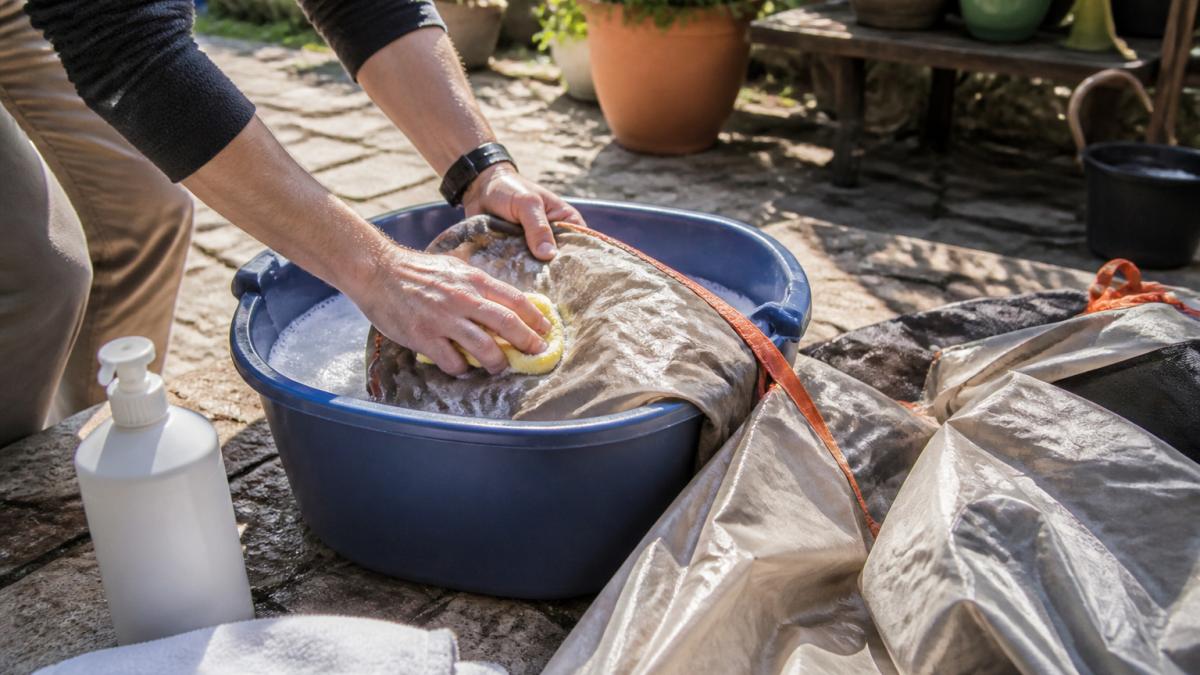
- Remove loose dirt. Brush off pollen, leaves and dust while the fabric is dry.
- Mix your solution. Add a small amount of fabric-safe soap to lukewarm water and stir gently.
- Soak the fabric. Submerge the item for about 15 minutes so dirt can loosen.
- Scrub gently. Use a soft cloth or brush in small, circular motions. Avoid heavy pressure on seams and coatings.
- Rinse thoroughly. Drain the soapy water and rinse with clean water until no suds remain. Soap residue can attract dirt and affect repellency.
- Air dry completely. Lay the fabric flat or hang it in shade, away from direct heat.
Watch out: Wringing or twisting the fabric can stretch coatings and damage seams. Press water out gently with a towel instead.
Choosing a Safe Soap and Avoiding Fabric Softener
Pick a mild soap made for technical fabrics. Many everyday detergents contain additives that leave a film on the surface, which can trap dirt and reduce breathability.
Skip fabric softener entirely. It coats fibers and can reduce water repellency. Dish soap and laundry detergent are often too harsh for coated materials, so use them only if the label allows it.
How to Remove Mildew from Outdoor Fabric
Mildew shows up as dark spots or a musty smell, especially after fabric stays damp in storage. Treat it early, before it sets deeper into the fibers.
Start by brushing off any loose spores outdoors so they do not spread indoors. Then clean the area with a mild solution and a soft brush. For stubborn spots, a diluted white vinegar solution is a common, gentler option than bleach. Test any stronger cleaner on a hidden patch first.
Dry the fabric fully in the sun, but not in direct heat for long stretches. Good airflow and complete drying are what stop mildew from returning.
Best Cleaner for Technical Fabric: A Safe Decision Guide
Most cleaning failures on technical fabric come from the cleaner, not the scrubbing. Use this decision tree to pick a product by fabric type and stain, and always confirm against the care label first.
Step 1: Identify the fabric family
- Solution-dyed acrylic (common on patio cushions and marine canvas): Color is locked into the fiber, so it tolerates mild soap and water well. Avoid solvent-based cleaners that can dull the finish.
- Polyester and nylon (tents, packs, rain shells): Usually coated or laminated. Mild soap only; solvents and bleach can attack coatings and seam tape.
- Olefin (polypropylene): Resists water and stains but is sensitive to heat and oil-based soils. Use mild soap and lukewarm water, never hot.
- Coated and laminated fabrics (PU, PVC, TPU): The coating is the performance layer. Avoid abrasives, alcohol, and bleach; these can cloud or crack the film.
- Marine canvas and awnings: Often treated with water repellents and mildew inhibitors. Follow the manufacturer's cleaner recommendation rather than a generic detergent.
Step 2: Match the cleaner to the stain
- Everyday dirt, pollen, bird droppings: Mild fabric-safe soap in lukewarm water. A few drops in a bucket is enough; more soap means more residue.
- Light mildew: Diluted white vinegar (about one part vinegar to four parts water) on a hidden patch first, then the visible area.
- Grease and oil: A small amount of mild soap worked in gently, blotted rather than scrubbed. Avoid dish soap on coated fabrics unless the label allows it.
- Stubborn mildew or dye-based stains: Stop and check the label. If bleach is permitted, use only oxygen-based bleach (color-safe) at the label's dilution, never chlorine bleach on coated or laminated fabric.
Step 3: Patch test before you commit
Dab the solution on a hidden spot, wait 5-10 minutes, then check for color change, tackiness, or a change in hand-feel. If the fabric feels slick or stiff afterward, rinse and do not proceed with that product.
Step 4: Know what to avoid entirely
- Fabric softener and dryer sheets: they coat fibers and reduce repellency.
- Chlorine bleach on coated, laminated, or colored fabric: it can weaken the coating and fade dye.
- Solvent cleaners, acetone, and alcohol on PU/PVC/TPU: they can dissolve or cloud the film.
- Pressure washers: they force water past seams and can abrade coatings.
A useful rule: if you are unsure whether a product is safe, skip it. Gentler methods protect performance over the long run.
The right cleaner depends on the fabric family and the stain, so match them before you start.
| Fabric family | Safe approach | Avoid |
|---|---|---|
| Solution-dyed acrylic | Mild soap and water | Solvent-based cleaners |
| Polyester and nylon | Mild soap only | Solvents and bleach |
| Olefin (polypropylene) | Mild soap, lukewarm water | Hot water, oil-based soils |
| Coated and laminated (PU, PVC, TPU) | Mild soap, gentle cleaning | Abrasives, alcohol, bleach |
| Marine canvas and awnings | Manufacturer's cleaner | Generic detergents |
Drying and Machine-Washing Limitations
Many technical items can be machine washed, but only on a gentle cycle with cold water and a mild detergent. Remove any removable covers or inserts first, and avoid high spin speeds that can stress seams.
Never put these items in the dryer unless the label allows it. Heat can damage coatings. Air drying is the safest choice, and it takes longer. Plan for it, and make sure the item is fully dry before storing it to prevent mildew.
How to Restore DWR Coating After Cleaning
Durable water repellent (DWR) is a surface finish that makes water bead and roll off. Detergents, abrasion, and repeated washing gradually wear it down, which is why a jacket or cushion can look clean but start soaking through at the shoulders or seams. Restoring DWR is a separate step from cleaning, and doing it right depends on the fabric and the product form. If the gear has broader damage beyond the coating, our field guide to repairing broken tent poles walks through those fixes.
When reproofing is actually needed
Test before you treat. Sprinkle a little water on the fabric:
- Beads and rolls off: DWR is intact; no treatment needed.
- Beads but wets out at seams or high-wear areas: Spot-treat those zones only.
- Soaks in immediately across the panel: The finish is worn; reproof the whole item.
Spray-on versus wash-in products
- Spray-on repellents are the safer default for garments and gear with breathable membranes, because they sit on the outer face and do not affect the lining or membrane. They also let you target high-wear zones.
- Wash-in repellents treat the whole item evenly and are convenient for canvas and non-membrane fabrics, but they can reduce breathability if used on waterproof-breathable shells. Check the label before using a wash-in product on a membrane garment.
Application steps that actually work
- Start with a clean, fully rinsed item. Repellent will not bond over soap residue.
- Apply the spray evenly in a well-ventilated area, holding the can or trigger a consistent distance from the fabric per the product instructions.
- Pay extra attention to shoulders, hoods, cuffs, and seams, where wear is heaviest.
- Let it dry per the label, then activate with gentle heat if the manufacturer allows it, a cool tumble or a pass with a warm iron over a cloth can help the finish set. Heat is what activates many DWR products, but too much heat damages coatings, so follow the care label.
- Re-test with a water sprinkle. If water still soaks in, the finish may be too worn to restore, and repair or replacement may be the better call.
For broader guidance on protecting your gear, read our guide on how to waterproof your camping tent. If you find damage while cleaning, our tips for repairing outdoor gear can help you decide what to fix first.
Booking Your Next Gear Care Step with Fitness Pro Living
Taking care of your outdoor gear keeps it reliable for weekends in the woods and long days on the trail. Fitness Pro Living builds camping and hiking equipment meant to last, and proper cleaning is one of the simplest ways to extend its life.
Browse our range of tents, backpacks and camping essentials to find gear that fits your next trip.
Frequently Asked Questions
How do you clean technical outdoor fabric at home?
Start by brushing off loose dirt and pollen. Mix a small amount of mild, fabric-safe soap into lukewarm water, then wash the fabric by hand with a soft cloth or soft-bristle brush. Rinse thoroughly with clean water to remove all soap residue, since leftover soap can attract dirt and affect water repellency. Test any cleaner on a hidden area first, and always follow the manufacturer's care label before you begin.
Can you machine-wash waterproof outdoor fabric?
It depends on the product and its construction. Many technical fabrics can be machine-washed on a gentle cycle with a technical-fabric detergent, but removable covers and cushions often have specific limits stated on the label. Avoid high heat and spin speeds, and never assume a machine wash is safe without checking the manufacturer's instructions first.
Can fabric softener damage waterproof or water-resistant fabric?
Yes. Fabric softener can coat fibres and leave residue that reduces breathability and water repellency. Skip it entirely when cleaning technical outdoor fabric, and rinse well so no detergent or softener residue remains on the material after washing.
How do you restore water repellency after cleaning outdoor fabric?
Once the fabric is clean and fully dry, check whether water still beads on the surface. If it soaks in, apply a wash-in or spray-on durable water repellent (DWR) product that suits the fabric type, following the product instructions. Reapplication after cleaning is often needed because washing can strip the original finish.
