

Last Updated: November 4, 2026
Quick Summary
Weatherproof gear for rainy hikes is a head-to-toe system: a waterproof-breathable rain jacket with sealed seams and pit zips, rain pants, waterproof hiking boots with grippy outsoles, gaiters, wicking socks, and a pack cover plus liner. Most hikers over-buy on the jacket and under-buy on feet, hands, and pack protection.
- Waterproof ratings are measured in millimeters of water column, and a ~5,000mm rating handles most three-season hiking.
- Vent on ascents by opening pit zips and the front zip, then seal everything before descents and rest stops.
- Gaiters stop water entering over the boot collar and are the cheapest upgrade most hikers skip.
- Use a pack cover outside and a pack liner inside so critical gear stays dry if the cover fails.
- Restore faded DWR by washing with a technical cleaner, applying treatment, and tumble drying on low.
Table of Contents
- Best Rain Gear for Hiking: A Head-to-Toe Kit Built for Wet Trails
- Hiking Rain Jacket: What a Shell Must Do on a Wet Climb
- Waterproof Hiking Boots: Traction, Membranes, and Fit
- Rain Pants, Layering, and Insulation in Cold Wet Weather
- Keeping Your Pack Dry with a Rain Cover and Pack Liner
- Rainy Day Hiking Checklist: What to Pack Before You Leave
- Care, Repair, and Restoring Durable Water Repellency
- Build Your Wet-Weather Kit with Fitness Pro Living
- Frequently Asked Questions
Best Rain Gear for Hiking: A Head-to-Toe Kit Built for Wet Trails
Weatherproof gear for rainy hikes is a system, not a single purchase. Get the shell right and skip the footwear and you still finish soaked from the ankles down.
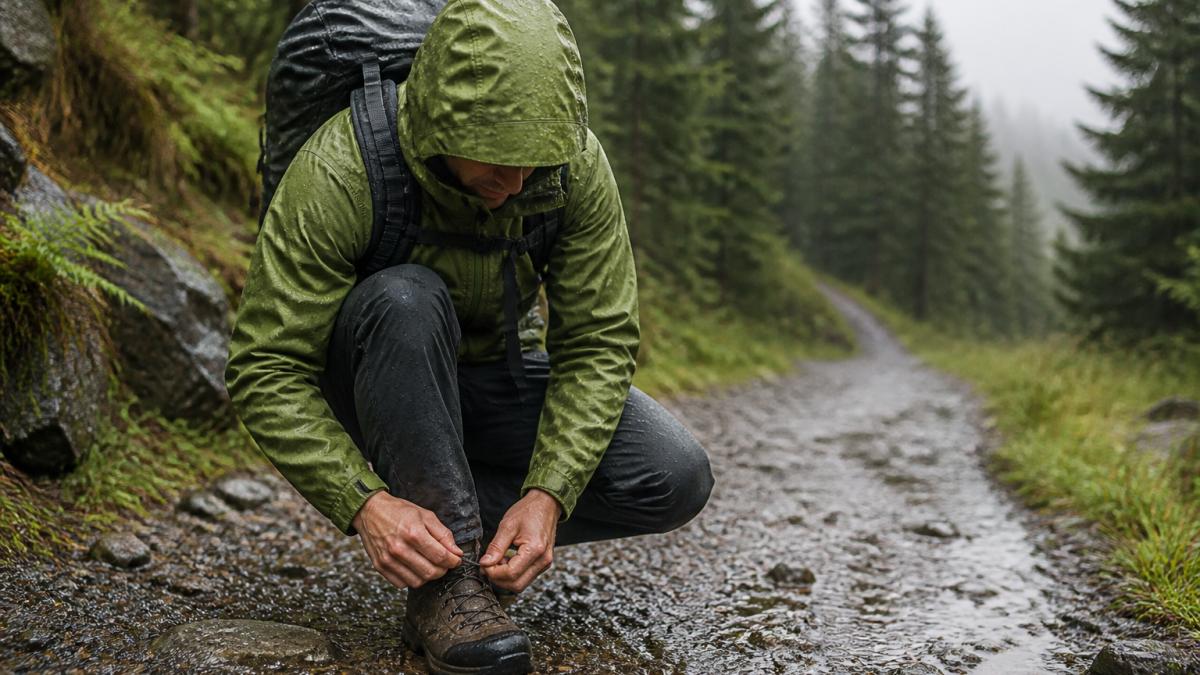
Below, we break the full kit into head-to-toe components, organized by how hard it is raining and how cold the trail is.
The core argument running through this guide: most hikers over-buy on the jacket and under-buy on feet, hands, and pack protection. A waterproof shell is the most visible piece of rain gear.
How to Read Waterproof Ratings and Sealed Seams
Waterproof ratings are measured in millimeters of water column, and the number tells you how much sustained rain pressure a fabric handles before water pushes through.
Two details matter more than the headline number:
- Sealed seams. Stitching punches holes in a waterproof fabric. Taped or sealed seams close them. An unsealed jacket leaks at the shoulders first.
- Durable water repellent (DWR). This is the surface treatment that makes water bead and roll off. It wears away with use and needs restoring.
- Water-resistant vs. waterproof. Water-resistant fabric sheds light spray. Waterproof fabric, with a membrane and sealed seams, keeps water out under pressure. Do not confuse the two when reading a product page.
| Rating | Handles | Good For |
|---|---|---|
| Water-resistant | Light drizzle, brief showers | Summer showers, town days |
| ~5,000mm waterproof | Moderate to heavy rain | Most three-season hiking |
| High waterproof + sealed seams | Sustained, wind-driven rain | Exposed ridges, cold wet days |
Hiking Rain Jacket: What a Shell Must Do on a Wet Climb
A hiking rain jacket has one job: keep rain out while letting sweat vapor escape. Those two goals fight each other.
Here is what we look for, in order of importance:
- A real membrane, not just a coating. Coatings work but wear faster.
- Sealed seams throughout. Not just the shoulders.
- Pit zips or core vents. These do more for comfort on a climb than any breathability rating.
- An adjustable hood that clears a brimmed hat. A hood that collapses against your face fogs your glasses and blocks your view of the trail.
- Packability. A shell you resent carrying stays in the pack.
Fit matters as much as fabric. A shell needs room for a base layer and a light midlayer underneath, but too much slack lets water pool in the sleeves and flaps in wind. Try it on over the layers you actually hike in.
Managing Sweat and Overheating on Uphill Sections
The biggest mistake on wet climbs is wearing the shell fully zipped from the trailhead. You overheat within minutes, sweat through your base layer, and then chill the moment you stop. The fix is a rhythm, not a garment:
- Start cold. Open the shell and vents at the base of the climb.
- Vent on the up, seal on the down. Open pit zips and the front zip on ascents; close everything before descents and rest stops.
- Manage the base layer. A synthetic or merino base layer moves moisture away from skin. Cotton holds it against you and turns a cool day genuinely cold.
- Slow down before you soak through. A slightly slower pace with fewer stops often keeps you drier than a fast climb with long recovery breaks.
Watch out: stripping the shell entirely on an exposed climb to cool off feels great for two minutes and then a wind gust or a rain squall hits. Vent instead of removing.
Waterproof Hiking Boots: Traction, Membranes, and Fit
Waterproof hiking boots combine a waterproof-breathable membrane with an outsole built for grip on wet roots, mud, and slick rock. The membrane keeps water out; the outsole keeps you upright.
Three things decide whether a waterproof boot works for you:
- Traction. A rubber outsole with a deep, aggressive lug pattern grips wet ground. Look for a recognized outsole brand and a lug depth suited to mud and loose trail.
- The membrane. A breathable waterproof membrane such as ROOF-TEX keeps water out while venting moisture, so your feet stay dry rather than stewing.
- Fit and support. A boot with an anti-fatigue insole and a roomy toe box reduces the shoulder and foot ache that shows up after a few hours. Width matters: a cramped toe box causes blisters on descents.
A popular option for wet-trail hiking is the ROCKROOSTER Bedrock Sand 6 Inch Waterproof Hiking Boots with Vibram®. The listing describes a Vibram® rubber outsole, a ROOF-TEX® waterproof membrane, and an anti-fatigue foam insole.

Watch out: a waterproof membrane only works if water cannot pour in over the top. On boggy ground or in deep puddles, pair the boot with gaiters.
Gaiters and Socks: Keeping Water Out of the Boot
Gaiters wrap the ankle and lower leg to stop water, mud, and trail debris from entering over the boot collar. They are the cheapest upgrade to a wet-weather kit and the one most hikers skip.
Socks are the other half of the equation. Waterproof or water-resistant socks add a membrane barrier inside the boot for days when the trail is more stream than path.
The 1000D Waterproof Leg Gaiters use a TASLON and 1000D nylon build with a TPU water-repellent treatment and an adjustable top strap.
All-Weather 100 Percent Waterproof Poncho →

Rain Pants, Layering, and Insulation in Cold Wet Weather
Rain pants turn a wet hike from a slog into a normal day. They block rain on the thighs and knees, shed mud, and add a windproof layer over your hiking pants. The layering system underneath them is what keeps you warm when the temperature drops and the rain keeps falling:
- Base layer: synthetic or merino, fitted, moisture-wicking. This is the layer that manages sweat.
- Midlayer: a fleece or light synthetic insulation for cold conditions. Synthetic insulation keeps some warmth even when damp; water-resistant down is lighter but needs more care in sustained wet.
- Shell: the rain jacket and rain pants on top.
For cold, wet days, the order matters more than the brand names. A wet base layer under a warm midlayer still chills you. Keep the base layer dry and the system works.
Keeping Your Pack Dry with a Rain Cover and Pack Liner
A wet pack is a slow disaster: your spare layers, sleeping bag, and electronics soak through, and you carry the extra weight for the rest of the trip. Two layers of defense solve it.
Pack covers are rated in millimeters just like shells. A liner, meanwhile, is a waterproof dry bag or sack that holds your critical gear inside the pack.

Our Backpack Rain Cover is rated to 5000mm, adjusts to packs from 15L to 90L with two vertical anti-slip buckles, packs into its own pouch, and carries a reflective logo for nighttime safety.
Rainy Day Hiking Checklist: What to Pack Before You Leave
A rainy day hiking checklist is a pre-departure list that confirms every layer of your rain protection is packed and working before you leave the trailhead. For the packing order itself, follow this step-by-step guide on how to pack a hiking backpack.
- Waterproof-breathable rain jacket with sealed seams and pit zips
- Rain pants
- Synthetic or merino base layer (no cotton)
- Midlayer for cold conditions
- Waterproof hiking boots with grippy outsoles
- Gaiters
- Waterproof or wicking socks, plus a spare pair
- Brimmed hat under the hood
- Pack cover and pack liner or dry bag
- Poncho or tarp shelter as backup
- Map and phone in a waterproof case
- Headlamp with spare batteries
- High-energy snacks and water
- Checked weather forecast and a turnaround time
Two items earn their place beyond the core kit. A waterproof poncho covers you and your pack in a sudden downpour and packs flat. A rainproof camping tarp shelter gives you a dry place to wait out a squall or eat lunch without soaking your layers.
Care, Repair, and Restoring Durable Water Repellency
Durable water repellency fades. When water stops beading and starts soaking into the face fabric, the jacket is not broken: the DWR needs restoring. Wash the shell with a technical cleaner, then apply a wash-in or spray-on waterproofing treatment and tumble dry on low to reactivate it.
For boots, rinse mud off after each wet hike, dry them at room temperature away from direct heat, and re-treat leather uppers periodically. Heat sources like radiators and fires crack membranes and glue.
Check seams and zips before each season. A small repair now beats a soaked pack later.
Build Your Wet-Weather Kit with Fitness Pro Living
The kit that keeps you comfortable in rain is built from the feet up, not the jacket down. Get the boots, gaiters, pack protection, and layering right, and a rainy hike stops being a test of endurance.
Fitness Pro Living stocks waterproof hiking boots with Vibram® outsoles and ROOF-TEX® membranes, 1000D waterproof leg gaiters, and a 5000mm backpack rain cover.
Get started with Fitness Pro Living and build your wet-weather kit.
Frequently Asked Questions
What gear do you need for hiking in the rain?
A complete kit covers you head to toe: a waterproof-breathable shell with taped seams, rain pants, waterproof hiking boots with a grippy outsole, gaiters, a brimmed hat, and a pack cover or pack liner. Add a synthetic insulation layer for cold conditions and a spare dry layer bagged in your pack. Fitness Pro Living's waterproof poncho, leg gaiters, and backpack rain cover cover some of the core pieces.
Is a rain jacket enough for hiking in wet weather?
Usually not. A hiking rain jacket protects your torso, but rain runs down onto your legs, into your boots, and onto your pack. On sustained wet hikes you also need rain pants or quick-drying hiking pants, waterproof footwear, and a pack cover. A jacket alone works for short showers or light drizzle; for hours of steady rain, treat it as one part of a system rather than the whole answer.
How do you keep your backpack dry on a rainy hike?
Use two layers of protection. A backpack rain cover with a high waterproof rating, such as the 5000mm cover from Fitness Pro Living, sheds rain off the outside and packs into its own pouch. Inside, line the pack with a plastic bag or dry sack so your spare layers and insulation stay dry even if water gets past the cover. Put your warmest layer in the liner first.
What should you wear under rain gear when hiking?
Skip cotton. Wear a synthetic or wool base layer that moves sweat away from your skin, then add a fleece or synthetic midlayer for warmth. The waterproof shell goes on top. On climbs, vent the shell or remove the midlayer before you overheat, since sweat inside a jacket feels just as wet as rain. Keep one dry base layer sealed in your pack for the end of the day.
Is hiking in the rain dangerous?
It can be, but the risk usually comes from conditions rather than rain itself. Wet rock and roots get slippery, streams rise fast, and visibility drops. Check the forecast, avoid exposed ridges and lightning, and turn back if water levels climb. With grippy footwear, a waterproof shell, and a dry layer in your pack, a rainy hike is manageable. Severe weather is the signal to change plans, not push through.
Rain is not a reason to cancel a hike. It is a reason to pack deliberately. Start with the boots and the feet, work up through gaiters, layers, and pack protection, and test the whole system on a short wet walk before you commit to a long one.
