

Last Updated: October 26, 2026
Quick Summary
How to prevent blisters while hiking long distances starts before you hit the trail by addressing three core causes: poor footwear fit, moisture buildup, and friction. Choose properly fitted boots with a snug heel and thumb's width of toe space, wear moisture-wicking socks with reinforced heels and toes, and keep your feet dry by changing into fresh socks when they get wet.
- Wear boots in the afternoon when feet are swollen to mimic trail conditions and ensure proper fit.
- Break in new boots on short walks before a long hike to identify pressure points.
- Look for hiking socks made from merino wool or synthetic materials with reinforced heels and toes.
- Change into dry socks immediately if your feet get wet from sweat or water crossings.
- Treat hot spots right away by stopping to inspect the area and applying protective tape.
Table of Contents
- Why Blisters Form on Long Hikes and How to Stop Them
- Choose Properly Fitted Hiking Boots and Shoes
- How to Break in Hiking Boots Before Your Trip
- Best Hiking Socks to Prevent Blisters
- Manage Moisture and Keep Your Feet Dry
- Recognize and Treat Hot Spots on Feet Hiking
- Apply Blister Tape for Hiking Correctly
- Your Pre-Hike and Trail Blister Prevention Routine
- Frequently Asked Questions
Why Blisters Form on Long Hikes and How to Stop Them
Blisters form when friction, moisture, and pressure combine to separate skin layers and fill with fluid (pubmed.ncbi.nlm.nih.gov). Understanding this is the first step to preventing them.
Preventing blisters while hiking long distances starts before you hit the trail. You can reduce blister risk by addressing three core causes: poor footwear fit, moisture buildup, and friction.
Long hikes put sustained pressure on your feet for hours, and your feet swell as the day goes on, changing how your boots fit. Add moisture from sweat or rain and conditions are perfect for blisters. Hot spots, redness and irritation, can appear before a blister.
Choose Properly Fitted Hiking Boots and Shoes
Proper fit is everything. A boot that's too loose lets your foot slide inside, creating friction with every step; one that's too tight creates pressure points. Neither works for long-distance hiking.
When you browse hiking boots, look for boots with a snug heel fit and room in the toe box. Your heel should not slip when you walk downhill. You need about a thumb's width of space between your longest toe and the front of the boot. This allows for natural foot swelling during long hikes without cramping your toes.
Try boots in the afternoon or evening when your feet are slightly swollen, mimicking how they'll feel on the trail. Wear the hiking socks you plan to use, it makes a real difference in how the fit feels. Learn more about comfortable hiking gear for beginners to help you select boots and other essentials.
Width matters too. A normal width works for some feet, but if yours is wider or narrower, look for boots that match.
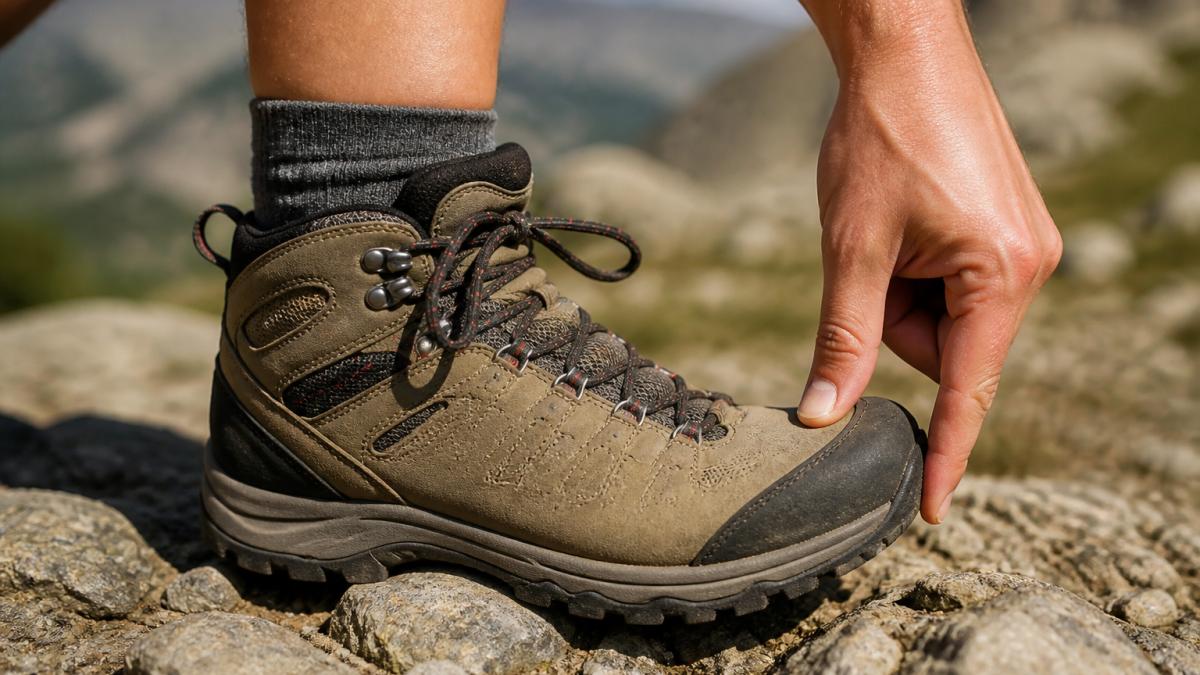
How to Break in Hiking Boots Before Your Trip
Wearing new boots for the first time on a long hike can increase blister risk. Gradually wearing them before a long hike can help you assess their fit.
Wear them around the house, then on short walks, gradually increasing distance and terrain difficulty.
Note any pressure points or rubbing during break-in walks, these are the spots most likely to blister. Apply moleskin or tape there during break-in to learn exactly where to protect yourself on the trail.
Consider wearing new boots on shorter walks before taking them on a long-distance hike.
Best Hiking Socks to Prevent Blisters
Sock choice is one factor to consider. Cotton, wool, and synthetic fabrics can differ in how they handle moisture.
Look for socks with reinforced heels and toes.
The OutdoorAdventure Alpaca Sock is made from alpaca wool and features reinforced heels and toes, shock-absorbing cushioning, and a less-bulky design that fits in regular shoes. The listing describes the socks as breathable and machine washable and dryable.

Sock liners are thin socks worn under a main hiking sock. If you're prone to blisters, consider whether an additional layer suits your needs.
Consider bringing extra socks and changing into dry ones if your feet get wet or sweaty.
| Prevention Layer | Material | Best For | Durability |
|---|---|---|---|
| Hiking Sock | Merino wool or synthetic | Primary moisture control | 1-2 years with care |
| Sock Liner | Silk or synthetic blend | Friction reduction | 6-12 months |
| Boot | Waterproof leather with cushioning | Structural support | 2-3 years |
Manage Moisture and Keep Your Feet Dry
Moisture and friction are factors to consider when planning how to manage your feet on a hike.
Start dry and stay dry. Consider starting your hike with dry socks and boots.
Match sock material to conditions. Sock materials and layering choices are factors to consider when planning for a hike.
OutdoorAdventure Alpaca Sock →
Use ventilation deliberately. Consider your footwear and clothing choices when planning for the conditions on your hike.
Handle water crossings and rain thoughtfully. Consider changing into dry socks if your feet get wet.
Manage sweat on the trail. Consider your comfort and the conditions as you plan what to bring.
Know the terrain effect. Pay attention to how your feet feel as terrain changes.
Moisture management can be one consideration when planning for a hike.
Recognize and Treat Hot Spots on Feet Hiking
Hot spots can be a sign of irritation. Their location may be one factor to consider when checking footwear fit and lacing.
Read the location. If a hot spot recurs, consider checking your footwear fit and lacing.
Treat the hot spot immediately. Stop at a safe spot and inspect the area.
When a hot spot appears, consider checking your footwear and how it feels. You can keep a first aid kit on hand to treat hot spots and blisters that develop on the trail.
Apply Blister Tape for Hiking Correctly
Some hikers consider tape as one option for areas where they experience rubbing.
Your Pre-Hike and Trail Blister Prevention Routine
Consider preparing before your hike and checking in with yourself during it.
Before your hike:
- Consider checking your footwear fit before starting.
- Consider bringing extra socks.
During your hike:
- Pay attention to how your feet feel during your hike.
- Consider changing socks if they get wet.
After your hike:
Learning about blister prevention can help you plan for long hikes. Consider footwear fit and moisture management as you prepare for the trail.
At Fitness Pro Living, we offer hiking boots, including the ROCKROOSTER Bedrock Brown 6 Inch Waterproof Hiking Boots with VIBRAM®. Check the product listing for details and sizing information.
Frequently Asked Questions
What are the main causes of blisters when hiking long distances?
Blisters are a concern hikers may consider when planning footwear and socks for long hikes.
Are hiking socks really that important for preventing blisters?
The [OutdoorAdventure Alpaca Sock](https://fitnessproliving.com/products/outdooradventure-alpaca-sock) is made from alpaca wool and features reinforced heels and toes, shock-absorbing cushioning, and a less-bulky design that fits in regular shoes. The listing describes the socks as breathable and machine washable and dryable.
How long should I break in hiking boots before a long hike?
Consider wearing new boots on shorter walks before taking them on a long-distance hike, and pay attention to how they feel.
When should I apply blister tape or moleskin preventively on a hike?
If you have concerns about a hot spot or blister, consider seeking advice from a qualified healthcare professional.
Blister prevention is about preparation, not luck. Start with properly fitted boots, add moisture-wicking socks, and catch hot spots early. The time you invest in prevention saves you from days of discomfort. Your feet will thank you when you reach the summit.
