

Table of Contents
- Start With a Beginner Hiking Gear Checklist
- Best Hiking Boots for Beginners: Fit Comes First
- Hiking Socks to Prevent Blisters
- Clothing Layers and Weather Protection That Stay Comfortable
- What to Pack for a Day Hike: A Minimal Loadout
- Comfort and Fit Problems Beginners Run Into
- Gear by Season, Budget and Safety Essentials
- Frequently Asked Questions
Last Updated: October 19, 2026
Start With a Beginner Hiking Gear Checklist
Comfortable hiking gear for beginners comes down to four things: footwear that fits, socks that manage moisture, layers you can adjust, and a pack light enough to forget you're wearing it.
Most first-time hikers carry too much, ending up with a heavy pack, hot feet and a sore back by the second hour. Build a small core kit, test it on short walks, then add only what a specific trail demands.
Essentials Versus Optional Upgrades
Essentials are what a day hike fails without: broken-in footwear, moisture-wicking socks, a water bottle, a rain shell, a small pack and offline navigation. Optional upgrades improve comfort but aren't required: trekking poles, gaiters, a second pair of socks, a sit pad and a lightweight camp chair.
- Footwear broken in before the hike
- Moisture-wicking socks, plus one spare pair
- Water bottle or bladder, filled
Best Hiking Boots for Beginners: Fit Comes First
The best hiking boots for beginners fit your foot shape, not the feature list. A well-fitted mid-height boot handles most beginner day hikes.
Look for a waterproof membrane, a cushioned insole and a grippy outsole. Our ROCKROOSTER Bedrock hiking boots pair a Vibram® outsole with an anti-fatigue foam insole and a ROOF-TEX® waterproof membrane, so traction and cushioning work together on uneven ground.

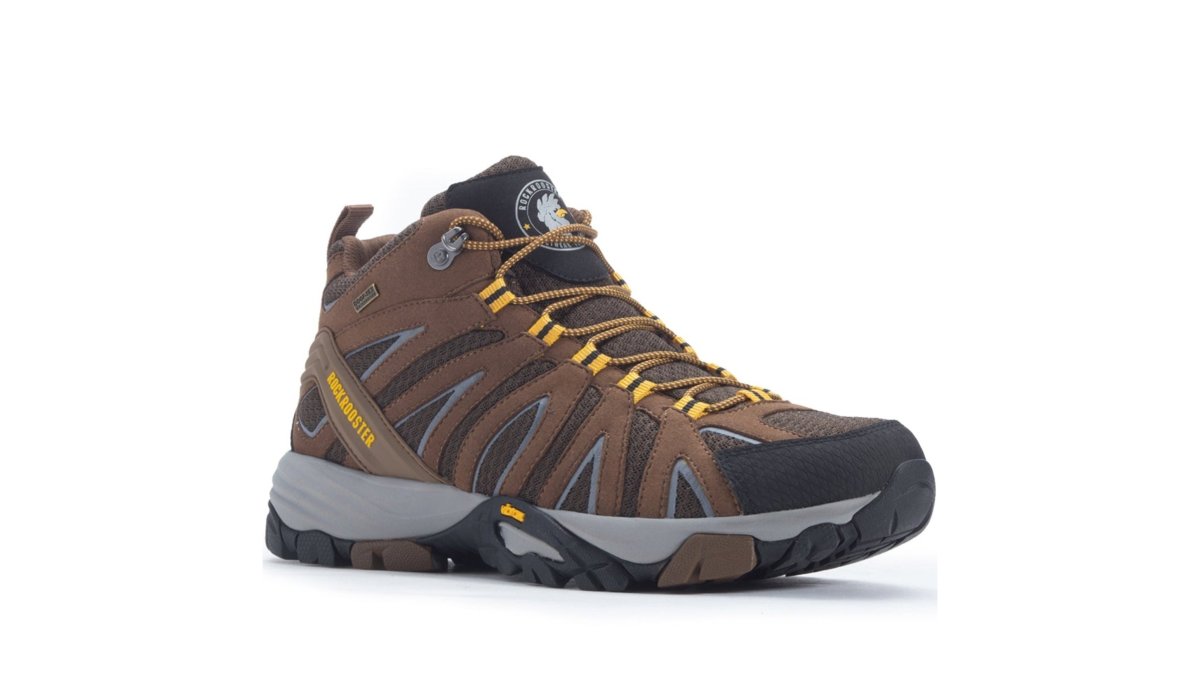
Sizing trips up most first-timers. Your feet swell on a hike, so try boots on late in the day and leave a thumb's width at the toe.
How to Break In and Test Boots Before a Hike
Break boots in over two to three weeks, not two days: around the house first, then short walks, then a longer walk with a loaded pack. A blister forming at home is a problem found early, when it costs nothing to fix.
Hiking Socks to Prevent Blisters
Blister prevention is a sock problem before it is a boot problem. Moisture and friction cause blisters, so the right sock moves sweat away and reduces rubbing.
Our OutdoorAdventure Alpaca Sock is built for this: breathable alpaca wool, a reinforced heel and toe, terry cushioning underfoot and a calf fit that holds without pinching. Unlike most heavy wool socks, these are machine washable and dryable.

Clothing Layers and Weather Protection That Stay Comfortable
Layering keeps you comfortable when the weather changes mid-hike. Start with a moisture-wicking base layer, add an insulating mid layer, and carry a waterproof shell. Add and remove layers as you climb and descend rather than sweating through one heavy jacket.
Avoid cotton for base layers. For sun protection, add a brimmed hat and a light long-sleeve layer, and check the CDC guidance on sun protection before a full day of exposure.
What to Pack for a Day Hike: A Minimal Loadout
A day hike loadout should fit in a 20-30 litre pack and weigh little enough that you forget it's there. Pack for the trail you're actually walking, not an imaginary expedition. The table below is the full picture; the checklist after it is what most beginners need.
| Item | Why It Earns Its Place | Optional? |
|---|---|---|
| Broken-in footwear | Traction and dry feet | No |
| Moisture-wicking socks | Blister control | No |
| Water, 1-2 litres | Hydration on the move | No |
| Rain shell | Weather protection | No |
| Offline map | Navigation backup | No |
| Base layer and warm mid layer | Temperature swings | No |
| Headlamp, first aid kit, whistle | Safety essentials | No |
| Trekking poles | Steady descents, less knee load | Yes |
| Spare socks | Dry feet after a wet crossing | Yes |
| Sit pad or camp chair | Comfort at rest stops | Yes |
| Gaiters | Debris and light rain protection | Yes |
The Minimal Checklist for a Short, Easy Hike
Most beginners overpack their first two-hour walk on a well-marked local trail, then blame the gear when they're tired. If your hike is under about two hours, on a marked trail, in mild weather and within phone signal, a small kit is still safe. Start here:
- Water bottle, filled, roughly 0.5 litre per hour of easy walking in mild weather
- One snack with salt and carbs
- Rain shell stuffed in the pack, even on a clear forecast
That's it. Everything else on the table is for a longer hike, a rougher trail, worse weather or personal comfort. The point isn't to hike unprepared, it's to stop carrying a 12-kilogram pack on a 5-kilometre walk, the most common reason first-timers finish sore and discouraged.
When to Add the Next Tier of Gear
Add items as the hike gets harder, not because a list said so. A practical rule set:
- Hike longer than about three hours: add a second water bottle or a bladder, a proper lunch, and a spare pair of socks.
- Trail is rough, steep or unmarked: add trekking poles, a paper map as backup, and a headlamp even if you plan to finish before dark.
- Weather is uncertain or the forecast shifts: add a warm mid layer, a dry bag for the phone and map, and a hat and gloves in shoulder seasons.
Navigation and Hydration Basics
Navigation and hydration are the two things beginners most often under-prepare. Download a trail map for offline use before you leave, because phone signal disappears on many trails, and learn to read the map's contour lines well enough to tell a climb from a flat stretch. Carry more water than you think you need, and drink regularly rather than waiting until you feel thirsty, thirst lags behind dehydration, especially in cool weather.
Comfort and Fit Problems Beginners Run Into
Most comfort problems trace back to three causes: a pack that sits too low, boots that were never broken in, and too much weight.
ROCKROOSTER Bedrock Brown 6 Inch Waterproof Hiking Boots with VIBRAM® →
A common mistake is buying a pack by litre capacity alone. Our Mons Peak IX Tiger Paw Z poles adjust from 115 to 135 cm and fold to 37.5 cm, so they stash when the trail flattens out.

Gear by Season, Budget and Safety Essentials
Season and conditions change the kit more than any other factor, and most beginner gear lists ignore both. Use the guide below to adjust the core loadout rather than rebuilding it each trip.
Gear by Season and Climate
Hot weather (summer, exposed trails, low elevation). Prioritise sun protection and water over insulation.
Cold weather (winter, high elevation, early starts). Add insulation and light.
Rain and shoulder seasons (spring, autumn, coastal trails). The swing between a warm climb and a cold, windy summit is the real risk.
Trail conditions. Loose scree and steep descents reward trekking poles and a boot with a grippy outsole.
Budget Tiers: What to Buy, Borrow or Skip
You don't need expensive gear to hike comfortably. A three-tier approach:
- Spend first on footwear and socks. These decide whether the day is comfortable, and a poor fit cannot be fixed by any other purchase. Buy these new and fitted properly.
- Borrow or reuse next. A day pack, trekking poles, a rain shell and a headlamp are all reasonable to borrow from a friend or reuse from everyday life for your first few hikes. A school backpack is not a substitute for a fitted day pack on a long hike, but it is fine for a short one.
- Upgrade last, once you know what you use. After three or four hikes you will know whether you actually want poles, a bladder instead of bottles, or a lighter shell. Buy then, not before.
Experienced hikers often find the cheapest gear gets the most use, a worn-in pair of shoes, a stuffable rain shell, a simple bottle, while expensive specialty items sit in the closet. Let your habits decide your upgrades.
Safety Essentials and Emergency Preparation
Safety gear belongs in every budget tier and every season. The minimum kit for a beginner day hike:
- A headlamp with fresh batteries, even on a hike you plan to finish before dark
- A small first aid kit with blister plasters, antiseptic wipes and tape
- A whistle on the shoulder strap, three blasts is the universal distress signal
Plan a turnaround time before you leave and stick to it. Most beginner emergencies are not dramatic injuries, they are a hiker who kept going past the planned turnaround, ran out of daylight and got cold. The National Weather Service guidance on outdoor weather safety is worth checking the night before any hike, and the CDC guidance on sun protection covers the sun-exposure basics for long days above the treeline.
Frequently Asked Questions
What gear do beginners actually need for hiking?
Start with footwear, socks, layers and water. That means one pair of hiking boots or walking shoes that fit well, moisture-wicking socks, a base layer, a light rain jacket, a 15-25 litre day pack, a water bottle and an offline trail map. Trekking poles, gaiters and camp furniture are upgrades, not requirements. Buy the essentials first, then add items once you know how long and how often you hike.
How should beginner hiking boots fit?
Leave about a thumb's width of space between your longest toe and the front of the boot, and check the ball of the foot for room to spread. Try boots on late in the day when feet swell, wear the socks you plan to hike in, and walk on an incline to feel whether your heel lifts. A normal width fits most people, but toe room matters more than the size number on the box.
What should I pack for a day hike as a beginner?
A day pack with water, snacks, a rain jacket, a warm mid layer, a trail map or offline navigation, a small first aid kit, sun protection and a headlamp covers most short hikes. Keep total pack weight low, roughly under 10 percent of your body weight for a day hike. Pack layers you can remove rather than one heavy jacket, and check trail conditions before you leave.
How can I prevent blisters on a beginner hike?
Wear moisture-wicking socks, ideally wool or a wool-synthetic blend, and avoid cotton because it holds sweat against the skin. Make sure boots have room in the toe box and are broken in before a long walk. Stop and adjust laces if you feel rubbing, and carry a small patch of blister tape. Clean, dry socks at the trailhead make a bigger difference than most beginners expect.
Do beginners need special hiking clothes?
No. Layering with clothing you already own works for most beginner hikes: a synthetic or wool base layer, a light mid layer, and a rain jacket as the outer shell. Avoid cotton next to the skin because it stays wet and cools you down. Add sun protection and a hat, and swap in dedicated hiking clothing once you hike regularly or in colder weather.
Is expensive gear worth it for occasional weekend hikes?
Only for the items that touch your comfort directly: boots, socks and your rain shell. These are where cheap materials show up fastest as blisters, wet feet or a cold, clammy hike. For occasional family trips, borrow or reuse a day pack, trekking poles and camp furniture, and spend the budget on footwear you will wear on every trip.
Comfortable hiking gear for beginners is a small, well-fitted kit tested before it matters, not a long shopping list. At Fitness Pro Living, we build gear made to work better and last longer, from waterproof hiking boots with Vibram® outsoles to cushioned alpaca socks and compact trekking poles, all backed by 227 customer reviews. Shop now and start your next trail with gear you can rely on.