

Table of Contents
- Is Expensive Hiking Gear Worth It? The Honest Answer
- Cheap vs Expensive Hiking Gear: What Actually Changes
- How Much to Spend on a Hiking Backpack
- Backpacking Gear Not Worth It: Where to Save Your Money
- When to Upgrade Hiking Gear (and When to Wait)
- Cost Per Use: The Math That Changes Everything
- Repairability, Warranties, and Secondhand Gear
- Frequently Asked Questions
Last Updated: October 12, 2026
Is Expensive Hiking Gear Worth It? The Honest Answer
The answer depends less on the price tag and more on how many kilometres you'll put on the gear. Expensive hiking gear is worth it when it solves a problem you actually have on the trail: weight on your back, blisters on your feet, cold nights, or gear that fails halfway through a trip. For a weekend hiker doing two or three short trips a year, a mid-range kit often performs just as well. For anyone logging regular long days or multi-night backpacking trips, the upgrade pays for itself in comfort and reliability.
At Fitness Pro Living, we sell camping and hiking gear, so treat this as a buyer's guide from people who handle these products daily, not as a neutral academic study. Below, we break down what actually changes when you spend more, which categories deserve your budget, and the cost-per-use math that settles most of these arguments.
Cheap vs Expensive Hiking Gear: What Actually Changes
Three things separate budget gear from premium gear: materials, construction, and weight. Everything else, including branding and colourways, is noise.
Materials and Construction
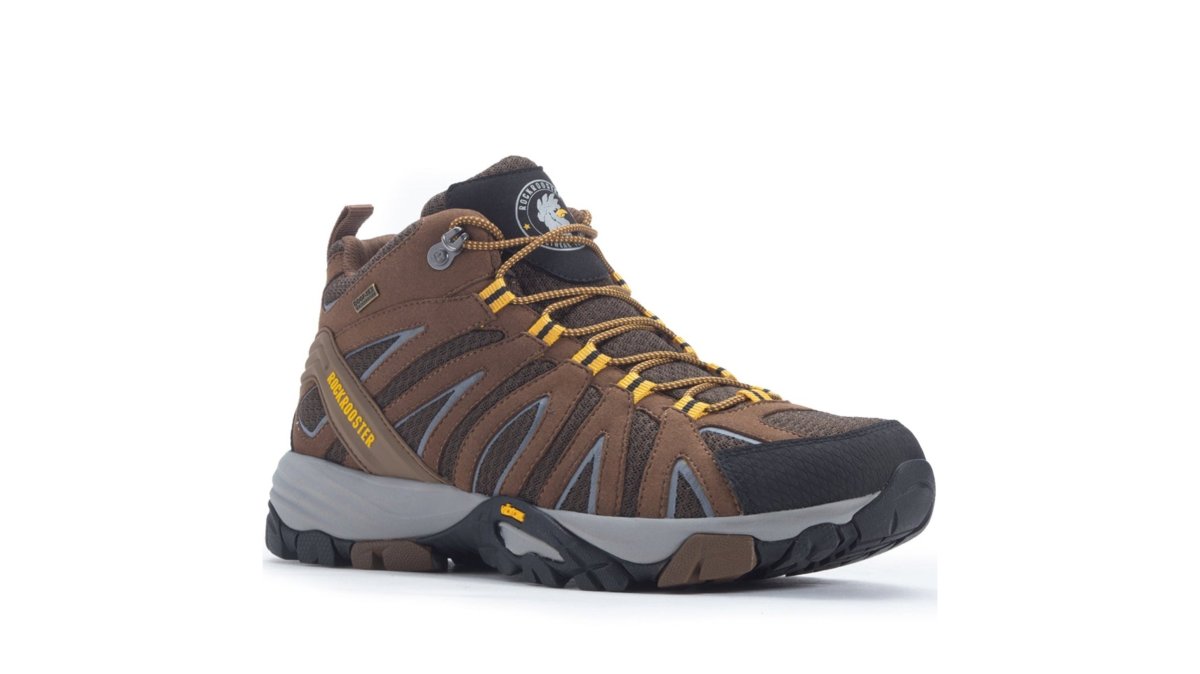
Cheap gear uses heavier fabrics, basic foams, and simpler stitching. Premium gear uses lighter, stronger materials and more careful assembly at stress points. A waterproof boot is a good example. Budget models often rely on a coating that wears off; better boots use a bonded membrane. The ROCKROOSTER Bedrock hiking boot pairs a Vibram outsole with a ROOF-TEX waterproof membrane, so water stays out while moisture inside can still escape.

Weight and Pack Weight
Weight savings are the clearest difference between cheap and expensive gear. Every gram you remove from your feet or back compounds over a full day. A lighter sleeping pad, a lighter pack, and lighter boots add up to a noticeably easier hike. But lighter usually costs more, and past a certain point you pay a steep premium for small gains. For most weekend hikers, cutting dead weight from your pack matters far more than shaving the last few grams off a stove.
How Much to Spend on a Hiking Backpack
Spend the most on the pack that carries the weight, because a good frame and hip belt transfer load off your shoulders. A backpack is the one category where the upgrade is felt immediately, on every trip. But "spend the most" is not a number, so here is how to translate it into a realistic budget.
A Prioritized Buying Plan for Beginners
New hikers often upgrade the wrong things first. A staged plan prevents that. Buy in this order, and only move to the next stage when your trips actually demand it.
Stage 1, Day hikes (0-10 km, no overnight). Footwear, socks, a small daypack, and a waterproof shell. You do not need a framed pack, a sleep system, or trekking poles yet. Put your money into boots that fit and a shell that keeps rain out.
Stage 2, Regular day hikes and first overnights. Add a framed backpack, a sleeping pad, a sleeping bag rated for the conditions you camp in, and a headlamp. This is where the pack upgrade pays off, because you are now carrying weight for hours.
Stage 3, Multi-night and thru-hikes. Add trekking poles, a lighter sleep system, and a cook kit. Weight savings start to matter more here than at any earlier stage, and this is the point where premium materials earn their price.
Price Tiers: What Budget, Mid-Range, and Premium Actually Buy
Prices shift with sales and seasons, so treat these as ranges rather than fixed figures. The pattern is consistent across categories.
| Tier | Typical range | What you get | Best for |
|---|---|---|---|
| Budget | Under roughly $100 for a pack | Heavier fabrics, simpler suspension, fewer adjustment points | Occasional day hikes, short trips |
| Mid-range | Roughly $100-$250 | Better hip belt and frame, lighter materials, more durable stitching | Regular day hikes and weekend overnights |
| Premium | Roughly $250 and up | Lightweight fabrics, refined suspension, replaceable parts, strong warranty | Multi-night trips, thru-hikes, heavy loads |
These ranges are not rules. A mid-range pack that fits you well will outperform a premium pack that does not, because fit and hip-belt contact decide comfort more than price.
Match the Pack to Your Trip Type
- Day hikes. A simple 15-25 L pack with a light frame or none at all is enough. Do not pay for load transfer you will never use.
- Weekend overnights. A 40-55 L pack with a real hip belt and adjustable torso length. This is the sweet spot for most buyers.
- Multi-night and thru-hikes. A 55-70 L pack with a lightweight frame, durable fabric, and replaceable buckles and straps. Repairability matters more here because you are far from a shop.
- Cold or wet conditions. Look for a pack that sheds water, has a rain cover or waterproof fabric, and does not absorb moisture into its straps.
How We Would Split a Starter Budget
| Category | Priority | Why It Matters |
|---|---|---|
| Backpack | Highest | Carries everything; hip belt and frame decide comfort |
| Footwear | Highest | Bad boots cause blisters and end trips early |
| Sleep system | High | Cold, poor sleep ruins the next day's hike |
| Trekking poles | Medium | Save your knees on descents and steep terrain |
| Cookware and extras | Low | Cheap versions work fine for most trips |
For a weekend hiker, a solid pack, decent boots, and a reliable sleep setup cover the essentials. Trekking poles like the Mons Peak IX Tiger Paw Z poles sit in the middle tier: not mandatory, but genuinely useful on long descents, and light enough to carry without regret.

Backpacking Gear Not Worth It: Where to Save Your Money
Several categories are overrated once you look past the marketing. Save here and spend the difference on footwear and your pack.
ROCKROOSTER Bedrock Brown 6 Inch Waterproof Hiking Boots with VIBRAM® →
- Ultralight cookware and titanium everything. A basic pot boils water just as well. You rarely notice the weight difference on a weekend trip.
- Premium stuff sacks and organisers. They are convenient, not essential. A few zip bags do the same job.
- Top-tier headlamps. A mid-range light is bright enough for camp chores and night walks to the toilet block.
- Designer camp furniture. Comfort matters, but a simple, sturdy chair or mat does the job without the premium markup.
- Upgraded apparel for occasional trips. A decent waterproof shell beats a wardrobe of specialist layers you'll wear twice a year.
When to Upgrade Hiking Gear (and When to Wait)
Upgrade when your current gear causes a recurring problem: boots that blister, a pack that digs into your shoulders, or a sleeping pad that leaves you cold. Wait when the only reason to buy is a sale, a new colour, or a review that made you envious.

Three signals it's genuinely time to upgrade:
- You're hiking more often. If trips have gone from twice a year to twice a month, the math on better gear changes fast.
- A specific item keeps failing you. Repeated discomfort or a near-miss on the trail is your cue.
- Your trips have changed. Overnight backpacking needs different gear than day hikes, and a three-season kit won't cut it in winter.
If none of those apply, your money is better saved. A beginner with occasional trips can wait until the pattern of use justifies the spend.
Cost Per Use: The Math That Changes Everything
Cost per use is the clearest way to judge whether expensive hiking gear is worth it. Divide the price by the number of trips you'll realistically take, then compare that figure to the discomfort or replacement cost of going cheap.
Say a pair of boots costs around $96 and lasts several seasons of regular hiking. Across dozens of trips, the cost per outing drops to a couple of dollars. A cheaper boot that needs replacing every season, or that leaves you with blisters you'd pay anything to avoid, often costs more in the end. This is the "buy once, cry once" argument, and it holds up when you actually use the gear.
The same logic applies to sleep systems. A sleeping pad and bag that keep you warm and comfortable night after night spread their cost across every trip. A budget option that leaves you cold gets replaced quickly, and the replacement resets the clock. The Camfy 30 sleeping bag carries an EN ISO 23537-1 temperature rating, so you can match it to the conditions you actually camp in rather than guessing.
Repairability, Warranties, and Secondhand Gear
Repairability and warranty terms often matter more than the sticker price, because they decide what happens when something eventually wears out. Gear that can be repaired lasts longer and costs less over its life than gear you throw away.
Check three things before you buy:
- Can it be repaired? Removable insoles, replaceable laces, and serviceable buckles extend a product's life.
- What does the warranty actually cover? Look for clear return and replacement terms rather than vague promises. The Camfy P3 Air sleeping pad, for example, includes a repair kit and a 30-day return and replacement policy.
- Is secondhand sensible? For hard goods like trekking poles and cookware, lightly used gear can be excellent value. Skip secondhand for footwear, where the fit is moulded to someone else's feet.
Buying well and maintaining what you own beats replacing cheap gear every season. That's the whole argument in one sentence.
The real challenge isn't choosing between cheap and expensive gear. It's matching your spend to how you actually hike, so your money goes where you'll feel it: your feet, your back, and your sleep. At Fitness Pro Living, we build gear for exactly that, from waterproof boots made to hold up on rocky trails to sleeping pads and bags designed for comfortable nights outdoors. Our customers keep coming back for gear that works better and lasts longer, backed by 227 reviews. Shop now and gear up for your next trip with equipment you can count on.
Frequently Asked Questions
Why is hiking gear so expensive?
Hiking gear costs more because of the materials and testing involved. Waterproof membranes, Vibram outsoles, and recycled insulation all cost more to produce than basic fabrics. Brands also invest in durability testing and certifications like EN ISO temperature ratings. The price reflects how many seasons the gear will last, not just what it costs to make.
How much should you pay for a hiking backpack?
For weekend trips, a quality backpack typically falls in the $100 to $200 range. That price gets you a padded hip belt, breathable back panel, and durable fabric that won't tear on trail. If you hike less than five times a year, a mid-range pack is enough. Frequent backpackers should spend more for better load distribution and comfort.
When should you upgrade your hiking gear?
Upgrade when the gear no longer does its job. Worn-out soles, leaking waterproof membranes, or a sleeping pad that won't hold air are clear signs. If you are hiking more often or tackling harder trails, better gear can improve comfort and safety. Don't upgrade just because something newer exists.
Can budget hiking gear be safe and reliable?
Yes, budget gear can be safe if you choose carefully. Look for certified temperature ratings on sleeping bags, recognized outsoles like Vibram on boots, and clear warranty terms. Budget gear often uses heavier materials, so it may weigh more, but it can still perform well on weekend trips. The key is matching the gear to your actual trail conditions.