

Table of Contents
- What Separates High Quality Camping Equipment From the Rest
- Choosing Durable Camping Tents for Families
- Sleep Systems, Backpacks, and the Gear That Carries You
- Camping Gear Stores: Where to Buy and What to Expect
- Gently Used Camping Gear: Worth It or a False Economy?
- Discounted Camping Equipment: How to Time Your Purchase
- Total Cost of Ownership: What Cheap Gear Really Costs
- Conclusion: Build Your Kit With Confidence
- Frequently Asked Questions
Last Updated: October 10, 2026
What Separates High Quality Camping Equipment From the Rest
Every tent looks waterproof and every sleeping bag promises a warm night.
This guide from Fitness Pro Living covers how to judge gear, where to shop, and when to buy.
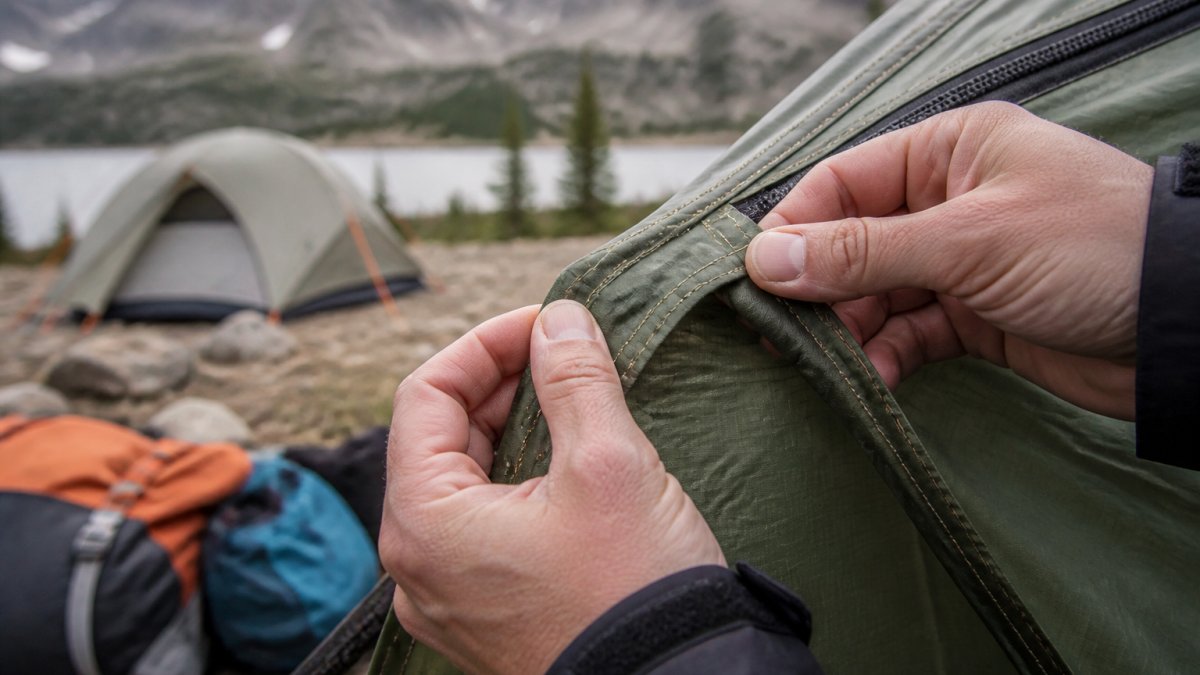
High quality camping equipment holds up to repeated use in real weather. The tells: reinforced stress points, taped seams, tested waterproof ratings, and non-corroding hardware.
A Practical Quality-Assessment Checklist
Skip the brand names and check five things:
- Fabric and coating: Look for a stated waterproof rating (measured in millimetres of hydrostatic head) rather than vague "water-resistant" claims
- Seams: Taped or sealed seams on tents and rain shells, not just stitched
- Weight-to-strength ratio: A pack or tent that's light and reinforced at stress points
Choosing Durable Camping Tents for Families
Durable camping tents for families face heavier use: more occupants, more gear, kids moving at night, frequent setup and takedown. Prioritize floor durability, pole strength, ventilation, and layout.
Start With Capacity, Not Headcount
Capacity ratings assume you're sleeping shoulder-to-shoulder with no gear. A four-person tent fits two adults and two children on pads, but is tight for four adults. Rule of thumb: subtract one or two from the rated capacity for realistic comfort.
- 2-person tent: one adult plus gear, or two adults on pads with no room for bags inside
- 4-person tent: two adults and two children, or three adults with minimal gear
- 6-person tent: four adults comfortably, or a family of five with a dog and gear
Camping with cots instead of pads? Size up again, cots eat floor space fast.
Floor Durability: The Spec That Matters Most
The floor takes the most abuse: rocks, roots, boots, dog claws, repeated folding. Look for a denier (D) rating, higher numbers mean thicker, more abrasion-resistant fabric:
- 20D-40D: ultralight territory, fine for careful backpacking but risky for family car camping
- 68D-75D: a solid middle ground for weekend family trips
- 150D and up: heavy-duty, best for rocky ground, frequent use, and kids
Also check for a bathtub-style floor, where the floor material extends several inches up the sides before the seam, preventing water from wicking in when the ground is wet. A thin coating with a seam at ground level will leak within a season of rocky pitches.
Poles, Seams, and Weather Resistance
- Poles: Aluminum bends under stress and can be field-repaired; fiberglass shatters. Look for aluminum poles with a stated diameter (e.g., 8.5mm or 11mm), thicker handles more wind load.
- Seams: Taped or sealed seams on the rainfly and floor are a must; stitched-only seams leak in sustained rain.
- Ventilation: Mesh panels and a fly that doesn't touch the inner tent reduce condensation, which otherwise leaves sleeping bags damp by morning.
Match the Tent to Your Trip Type
- Car camping and weekend family trips: prioritize space, standing height, and durability over weight. A 6-person tent with a 75D floor and aluminum poles is a workhorse.
- Backpacking with kids: weight matters, but so does setup. Look for a tent one adult can pitch quickly, with color-coded poles and clips rather than sleeves.
- Three-season vs. four-season: three-season suits most family trips from spring through fall. Four-season adds weight and cost for snow load and high wind, unnecessary unless you camp in winter or exposed alpine conditions.
A Quick Family Tent Checklist
- Capacity rated at least one higher than your actual headcount
- Floor denier of 68D or higher for car camping
- Bathtub-style floor with taped seams
Fit matters as much as build: a tent too small for your family gets used less, no matter how well it's made.
Sleep Systems, Backpacks, and the Gear That Carries You
Sleeping bags and backpacks are where comfort and fit decide everything. A bag's temperature rating is a guideline, not a guarantee, it assumes a base layer and an insulated pad. Without insulation underneath, you lose heat to the ground.
Sleeping Bag Temperature Ratings: What the Number Really Means
Most ratings follow the EN 13537 or ISO 23537 standard, tested with a mannequin in a lab. Focus on the comfort rating, the temperature at which an average woman sleeps comfortably. The lower limit is where an average man stays warm curled up; the extreme rating is a survival threshold, not a comfort target.
A practical approach:
- Choose a bag whose comfort rating is at least 10°F (about 5°C) below the coldest temperature you expect to camp in.
- If you sleep cold, add another 10°F of margin.
- If you sleep warm, you can push closer to the comfort rating.
Shape matters: mummy bags are lighter and warmer per ounce, rectangular bags are roomier but heavier, and semi-rectangular splits the difference.
The Sleeping Pad Is Half Your Sleep System
A bag insulates you from the air above; a pad insulates you from the ground below. Without a pad, even a well-rated bag loses heat through conduction. Look for an R-value, which measures resistance to heat flow:
- R-value 1-2: summer only, warm ground
- R-value 3-4: three-season camping
- R-value 5+: cold weather, snow, or if you sleep cold
Closed-cell foam pads are cheap, durable, and never puncture, but bulky. Air pads pack small but can puncture. Self-inflating pads combine foam and air. For cold weather, look for an ASTM F3340 tested R-value.
Backpack Fit: Torso Length, Not Height
The most common cause of shoulder pain on the trail is a pack sized to height instead of torso.
How to measure:
- Have someone find your C7 vertebra and your iliac crest (top of hip bones).
- Measure the distance between them along your spine.
- Match that measurement to the pack's size chart (usually XS-XL).
A well-fitted pack carries 80% or more of its weight on your hips through the hip belt, not your shoulders. Load-lifter straps fine-tune how the pack sits against your back. If a salesperson fits you by height alone, ask them to measure your torso.
Compatibility Between Sleep System Components
Your bag, pad, and pack need to work together:
- Bag and pad width: a wide pad (25 inches or more) may not fit a mummy bag's hood, check the bag's shoulder and hip girth against your pad width.
- Pad and tent floor: a pad wider than the floor space pushes against the walls and collects condensation.
- Bag and pack volume: a synthetic bag compresses less than down, so it may need a larger pack or a compression sack.
A Quick Fit and Sizing Checklist
- Sleeping bag comfort rating at least 10°F below expected low
- Sleeping pad R-value matched to season and ground conditions
- Torso length measured, not guessed from height
Fit beats features: a mid-range pack that fits your torso outperforms a premium pack that doesn't.
Camping Gear Stores: Where to Buy and What to Expect
Camping gear stores fall into three categories, each with trade-offs:
| Store type | Strengths | Watch out for |
|---|---|---|
| Specialty outdoor retailers | Expert staff, hands-on fitting | Higher prices, limited stock |
| Big-box and general retailers | Broad availability, frequent sales | Less knowledgeable staff, mixed quality |
| Online and direct-to-consumer | Wide selection, easy comparison | You can't try fit before buying |
Specialty stores let you test a pack's fit and see tent fabrics in person, worth the trip for high-ticket items. Online wins on selection and price but puts the burden on you to check specifications.
At Fitness Pro Living, we design our tents, packs, and camping furniture to hold up to repeated weekend use, and our gear is backed by a community of 227 reviewers who put it through real trips.
Gently Used Camping Gear: Worth It or a False Economy?
Gently used camping gear can be excellent value, but only for certain items. Hard goods like tents, cookware, and lanterns often have plenty of life left at a real discount; soft goods are riskier.
Buy used with confidence when:
- The item has a clear service history and no repairs
- You can inspect seams, zippers, and coatings in person
- Replacement parts are still available
Avoid used gear when:
- The waterproof coating has visibly flaked or peeled
- A sleeping bag's loft has collapsed (insulation loses performance over time)
- The item is safety-critical, like a climbing harness or a stove with a damaged valve
Discounted Camping Equipment: How to Time Your Purchase
Discounted camping equipment follows a predictable calendar. End-of-season sales in late summer and early autumn clear out tents, sleeping bags, and warm-weather gear.
Timing around these windows saves money, but a discount on gear that doesn't fit your needs isn't a deal.
According to REI's guide to choosing camping gear, matching gear to your specific trip conditions matters more than buying the most expensive option.
Total Cost of Ownership: What Cheap Gear Really Costs
Cheap gear is rarely cheap over time. A budget tent that leaks after one season, a backpack whose strap rips, or a bag that loses loft all get replaced sooner, and the replacements add up.
A simple way to compare is cost per season of use:
| Gear type | Budget option | Durable option | What drives the difference |
|---|---|---|---|
| Tent | Replaced every 1-2 seasons | Lasts 5+ seasons | Floor denier, pole material, taped seams |
| Backpack | Straps or zippers fail early | Holds up for years | Hardware quality, reinforced stress points |
| Sleeping bag | Loses loft quickly | Retains warmth longer | Fill quality, shell fabric |
The durable option usually costs more upfront but less per season. That's the case for buying high quality camping equipment once rather than replacing it repeatedly.
For current pricing on our tents, packs, and camping furniture, check our website, since pricing depends on the specific model and any seasonal promotions.
Conclusion: Build Your Kit With Confidence
Building a reliable kit takes patience and a clear checklist. The challenge isn't finding gear, it's knowing which details predict durability and which are marketing.
Fitness Pro Living makes tents, backpacks, camping furniture, and lighting built to work better and last longer, for weekend trips and long days on the trail alike.
Shop now with Fitness Pro Living and build a kit you can count on for every adventure.
Frequently Asked Questions
Where is the best place to buy high-quality camping equipment?
Specialist outdoor retailers and established online camping equipment stores tend to carry gear with clearer specifications and better after-sales support than general marketplaces. Look for stores that publish material details, weight limits, and warranty terms on each product page. If you can visit a physical shop, test the zips, seams, and pole joints in person before ordering. Fitness Pro Living stocks a range of camping equipment online with reviews from verified buyers to help you judge real-world performance.
What should I look for when buying durable camping gear?
Check four things: fabric and coating (denier rating and waterproof head), stitching (double-stitched or taped seams on tents), hardware (metal zips and reinforced pole joints), and warranty length. A tent with a 3,000mm hydrostatic head will handle sustained rain better than a 1,500mm model. For backpacks, look at the harness padding and whether the hip belt transfers weight off your shoulders. Gear with replaceable parts, such as pole sections and buckles, tends to last far longer.
Is gently used camping equipment worth buying?
It can be, if you inspect carefully. Tents and sleeping bags are riskier because waterproof coatings and insulation degrade with use. Hard goods like camp furniture, cookware, and lanterns hold up well secondhand. Ask the seller for the age, storage conditions, and any repairs. Avoid anything with a repaired pole, delaminated coating, or compressed sleeping bag loft. If the price is above 60% of new, buying new with a warranty usually makes more sense.
How do I choose a durable tent for a family?
Match the tent to your typical trip. For weekend car camping, prioritise a high waterproof rating, a full-coverage rainfly, and a footprint that fits your family plus gear. Look for aluminium poles rather than fibreglass, blackout or dark inner tents if you have light sleepers, and a vestibule for wet boots. Check the packed weight and size against your vehicle space. A well-specified 4-person tent with taped seams and a 3,000mm head will outlast a cheaper model by several seasons.