

Table of Contents
- Best Hiking Backpacks for Heavy Loads: Quick Comparison
- 100L Waterproof Backpack: Maximum Capacity for Multi-Day Expeditions
- 70L Military Backpack: Heavy-Duty Frame for Serious Trails
- How to Fit a Hiking Backpack for Comfort Under Heavy Loads
- Hiking Backpack Capacity Guide: Choosing the Right Size
- How to Pack a Hiking Backpack for Load Stability
- Backpack Weight Distribution and Load Limits
- What Makes a Backpack Suitable for Heavy Loads
- Quick Buying Guide: Which Backpack for Your Trip
- Final Thoughts
- Frequently Asked Questions
Last Updated: October 18, 2026
Best Hiking Backpacks for Heavy Loads: Quick Comparison
When you're carrying serious weight, your backpack is the difference between a comfortable day and a painful one. A poorly designed pack strains your shoulders and exhausts you; the right one spreads weight across your hips and back, keeps your center of gravity stable, and lets you focus on the trail.
Finding the best hiking backpacks for heavy loads depends on capacity, frame support, and fit.
Below, we've compared options across capacity, load limits, and real-world performance, evaluated for durability, comfort, and weather protection.
Comparison Table
| Backpack | Capacity | Weight | Best For | Key Strength |
|---|---|---|---|---|
| Waterproof Outdoor Camping Hiking 100L | 100L | Not specified | Multi-day expeditions | Maximum capacity with 3D suspension |
| Waterproof Outdoor Camping 70L Military | 70L | Not specified | Heavy-duty trails | Military-grade durability, breathable back |
| Army Style Waterproof Outdoor Hiking | 35L | 2.2 lbs | Day hikes with gear | Tactical design, chest/hip belt |
| XGear Tactical 30L | 30L | 1.6 lbs | Lightweight trips | Ergonomic weight distribution |
| 35L Folding Ultralight | 35L | 0.736 lbs | Portability + capacity | Folds to 9x7.8x1.5 inches |
100L Waterproof Backpack: Maximum Capacity for Multi-Day Expeditions
The Waterproof Outdoor Camping Hiking 100L Large Capacity Backpack is built for serious multi-day trips. At 100 liters, it handles a full week in the backcountry without leaving essentials behind.


The 3D suspension system with air diversion design improves ventilation and comfort on long days. Waterproof Oxford cloth protects your gear in rain, and padded shoulder straps with load lifters distribute weight across hips and shoulders.
This pack excels when total capacity is your priority. Multiple pockets keep gear organized, the expandable design compresses when not fully loaded, and thru-hikers can go longer between resupplies.
At Fitness Pro Living, this 100L pack is priced at $121.99 and backed by customer reviews praising its durability and waterproof reliability.
70L Military Backpack: Heavy-Duty Frame for Serious Trails
The Waterproof Outdoor Camping 70L Military Backpack balances capacity and manageability. At 70 liters, it handles 3-5 day trips without the bulk of a 100L pack, and military-grade 600D Oxford cloth withstands rough terrain and repeated use.

What sets it apart for heavy loads is the breathable cotton back panel: these pads decompress under weight, reducing pressure points. The D-type hanging buckle and four external hanging systems attach extra gear without stuffing the main compartment.
Adjustable shoulder straps and hip belt suit varied body types, and the included lifeguard whistle adds emergency utility without extra weight.
Fitness Pro Living offers this 70L pack at $93.99, a strong value for serious backpackers, and its waterproof construction and durable materials last through years of heavy-load hiking.
How to Fit a Hiking Backpack for Comfort Under Heavy Loads
Fitting a hiking backpack correctly is the single most important factor in comfort. An improperly fitted pack transfers weight to your shoulders and neck instead of your hips, causing fatigue within hours.
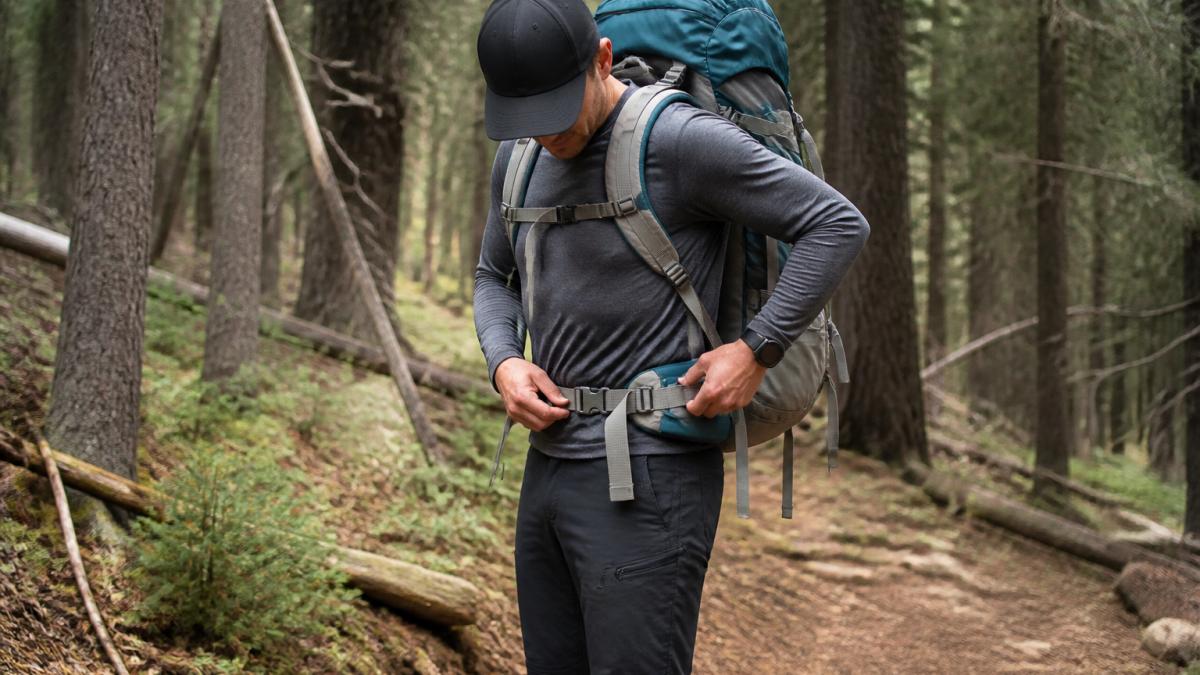
Start with torso length. Your pack's frame should align with your spine, with the top of the shoulder straps just below your collarbone.
Next, position the hip belt on your hip bones, not your waist. Properly positioned, it carries 60-70% of the load.
Adjust the shoulder straps last: snug enough to prevent shifting, loose enough for full arm movement. The load lifters should angle back at 45 degrees to transfer weight from your shoulders to your back.
Test the fit with a 30-pound load, which reveals problems an empty pack won't. Walk 10-15 minutes; if you feel shoulder pressure or side-to-side shifting, adjust the fit.
Body shape matters: longer torsos need adjustable frames extending higher, shorter hikers benefit from smaller frame heights. Fitness Pro Living's range covers various torso lengths.
Hiking Backpack Capacity Guide: Choosing the Right Size
Pack capacity determines what you can carry. Too small, and you leave essential gear behind; too large, and you carry unnecessary weight.
For day hikes under 8 hours, a 20-30L pack suffices. The XGear Tactical 30L and 35L Folding Ultralight both work here.
Weekend trips (2-3 nights) require 40-60L capacity. You need room for a sleeping bag, pad, tent, food, and clothing. The Army Style Waterproof 35L fits the lower end, while the 70L Military Backpack provides comfortable margin.
Multi-day expeditions (4+ nights) demand 70-100L capacity. The 70L Military and 100L Waterproof packs handle this range. At 4+ nights, you're carrying food for extended periods, which demands real volume.
Consider your typical trip length, not your longest. Most hikers take weekend trips, so a 60-70L pack serves them better than a 100L they'll rarely fill, and an oversized pack tempts you to overpack.
Weather and terrain also matter: winter trips need more insulation and clothing, pushing toward larger packs, while technical alpine routes demand less gear but more specialized equipment.
How to Pack a Hiking Backpack for Load Stability
How you pack matters as much as which pack you choose. Poor packing shifts weight, destabilizes your center of gravity, and exhausts you faster.
Place heavy items (water, food, stove) in the middle of the pack, close to your back, to keep weight centered and prevent the pack from pulling you backward.
Pack medium-weight items (clothing, sleeping bag) around the heavy core to create a stable mass that moves with your body.
Place lightweight items (tent, sleeping pad, clothing) on the outside and top. A sleeping pad strapped outside actually improves stability by lowering your center of gravity.
Distribute weight evenly side-to-side; a pack heavier on one side pulls you off-balance, straining one shoulder and hip.
Use compression straps to cinch everything tight. Loose gear shifts as you hike, changing your center of gravity with every step.
For long descents, move heavy items slightly higher in the pack. This prevents the pack from pulling you forward on steep downhill sections.
Waterproof Outdoor Camping Hiking 100L Large Capacity Backpack →
Test your packing on a short hike before a big trip. A poorly packed 40-pound load on a 5-mile hike teaches you more than any guide.
Backpack Weight Distribution and Load Limits
Understanding how weight distributes across your body prevents injury and improves comfort.
Your hip belt carries the heaviest load because your hips can support more weight than your shoulders. A properly fitted hip belt distributes weight across your pelvis, which connects to your legs and core.
Shoulder straps provide stability and prevent the pack from swinging. They shouldn't carry the primary load. If you feel most weight on your shoulders, your hip belt isn't positioned correctly or isn't tight enough.
Load limits vary by pack design and materials. Most quality hiking backpacks safely carry 40-50 pounds. Beyond 50 pounds, even well-designed packs strain your spine and joints.
The Waterproof 100L pack handles loads effectively due to its 3D suspension system. The 70L Military pack works well with loads. Lighter packs like the 30-35L options suit loads.
Your body weight also affects load capacity. Heavier hikers can comfortably carry loads that would strain lighter hikers. A 200-pound person can carry 50 pounds more safely than a 120-pound person.
What Makes a Backpack Suitable for Heavy Loads
Not all backpacks handle heavy loads equally. Several design features separate packs that excel under weight from those that struggle.
Frame support is fundamental. Packs with internal or external frames distribute load more effectively than frameless designs.
Hip belt design determines comfort with heavy loads. Wide, padded hip belts with proper curvature transfer weight to your hips instead of your shoulders.
Back panel construction matters for ventilation and comfort during long carries. Breathable materials prevent sweat buildup, which causes chafing and discomfort.
Shoulder strap padding should be substantial and ergonomic. Thin straps concentrate pressure and cause shoulder pain. Quality padding spreads pressure across a larger area, improving comfort.
Material durability prevents pack failure under heavy loads. Waterproof Oxford cloth and high-denier nylon resist tears and abrasion.
Load lifter angles affect how weight transfers. Proper 45-degree load lifters pull weight toward your back. Steep angles reduce effectiveness.
Compression straps keep gear stable. Multiple compression points prevent shifting, which destabilizes your center of gravity.
According to REI's backpack fitting guide, proper frame support and hip belt design reduce strain on your shoulders by up to 40% compared to poorly designed packs.
Fitness Pro Living's selection prioritizes these features because we understand that comfort and durability matter on the trail.
Quick Buying Guide: Which Backpack for Your Trip
For 1-2 day hikes with light loads (under 20 lbs): The 35L Folding Ultralight at $44.00 provides capacity without excess weight. Its 0.736-pound weight leaves room for gear without burden.
For weekend trips (2-3 nights, 30-40 lbs): The Army Style Waterproof at $79.95 offers 35L capacity, chest and hip belts, and tactical durability. At 2.2 pounds, it's substantial enough for heavy loads without excessive weight.
For serious multi-day trips (3-5 nights, 35-45 lbs): The 70L Military Backpack at $93.99 is our top recommendation. The breathable back panel, adjustable straps, and waterproof construction handle heavy loads on demanding trails. The 70L capacity prevents overpacking while providing real volume.
For expeditions (5+ nights, 40-50 lbs): The 100L Waterproof Backpack at $121.99 handles maximum capacity with 3D suspension. This is the choice for thru-hikers and extended backcountry trips where resupply isn't possible.
For ultralight backpacking: The 35L Folding Ultralight at $44.00 folds to pocket size and weighs less than a pound. Serious ultralight hikers who minimize gear load benefit from this option's portability and packability.
Final Thoughts
Choosing the best hiking backpacks for heavy loads means matching capacity to your typical trips, prioritizing frame support and hip belt design, and testing fit with real weight before committing. The difference between a good pack and a poor one becomes obvious after a few miles with 40+ pounds on your back.
Fitness Pro Living's backpack selection spans from ultralight daypacks to expedition-grade 100L systems. Each pack is built with waterproof materials, load-bearing design, and comfort features that perform on real trails. Our community of hikers has tested these packs on challenging terrain, and the feedback is clear: reliable gear makes every adventure better.
Shop Fitness Pro Living's hiking backpacks and find the pack that matches your adventure style. Whether you're planning weekend trips or month-long expeditions, we have the gear you can count on to stay comfortable and prepared.
Frequently Asked Questions
What is the best hiking backpack for carrying heavy loads?
The best hiking backpack for heavy loads combines a 70-100 litre capacity with a sturdy frame, padded hip belt, and load-bearing suspension system. The 100L Waterproof Outdoor Camping Hiking Backpack offers maximum capacity with 3D suspension and waterproof construction, while the 70L Military Backpack delivers heavy-duty performance with external hanging systems and breathable cotton back padding. Choose based on trip length and terrain difficulty.
How many liters should a backpack be for a heavy load?
For heavy loads, aim for 60-100 litres depending on trip duration. The hiking backpack capacity guide shows that a 70L pack handles 3-5 day trips comfortably, while 100L packs suit week-long journeys. Larger capacity reduces weight concentration on your shoulders and hips.
How should a hiking backpack fit when carrying heavy gear?
A properly fitted hiking backpack should sit snug against your back with the hip belt carrying 60-70% of the weight. Shoulder straps should sit one finger-width below your collarbone, and the pack's length should match your torso length. Adjust load lifters at a 45-degree angle to pull weight closer to your body. Ensure the back panel contacts your spine fully without gaps, and the hip belt wraps securely around your hip bones, not your waist.
How do you pack a hiking backpack to carry weight comfortably?
Place heavier items at mid-pack height, close to your spine, for balanced weight distribution. Pack dense gear first, then lighter items on top and around the sides. Keep frequently accessed items in outer pockets. Distribute weight evenly left and right to prevent shoulder strain. Use compression straps to stabilize the load and prevent shifting during movement. This packing method reduces back strain and improves stability on uneven terrain.
What weight limit should I respect when hiking with a backpack?
The backpack weight distribution matters more than total weight; proper frame support and hip belt design allow heavier loads to feel lighter by transferring weight to your legs rather than your shoulders.