

Last Updated: October 25, 2026
Quick Summary
The best camping stoves for beginners balance ease of use, reliable ignition, and straightforward fuel handling, whether you're car camping or backpacking. The Alpine Cuisine Lightweight Portable Gas Stove ($143.99) excels for backpacking at 2.9 lb with automatic ignition, while the Leafy Twin Burner Chef Gas Stove ($139.99) suits car camping with 15,000 BTU across two independent burners.
- The Alpine Cuisine weighs 2.9 lb and features automatic ignition and wind resistance for compact camping.
- The Leafy Twin Burner delivers 15,000 BTU total output (7,500 per burner) for simultaneous cooking on two independent burners.
- Butane cartridges work best for warm-weather trips but lose vapor pressure below 40-50°F; propane or blended canisters suit cold-weather camping.
- A standard butane cartridge provides one to two hours of continuous cooking; plan one spare canister per two people for a weekend trip.
- Test your stove at home before your first trip to practice ignition, heat control, and shutdown safely.
Table of Contents
- Quick Comparison: Top Camping Stoves for Beginners
- Single-Burner vs Two-Burner Camping Stove: Which Suits You?
- Understanding Camping Stove Fuel Types and What Beginners Should Know
- How to Use a Camping Stove Safely: Setup, Lighting, and Shutdown
- Camping Stove Safety Tips Every Beginner Must Know
- What Makes a Camping Stove Beginner-Friendly
- Getting Started: Choosing Your First Camping Stove
- Frequently Asked Questions
Quick Comparison: Top Camping Stoves for Beginners
The best camping stoves for beginners balance ease of use, reliable ignition, and straightforward fuel handling, whether you're car camping or backpacking.
At Fitness Pro Living, we've curated options that prioritize safety and dependability over unnecessary features.
| Stove Model | Type | Fuel | Price | Best For |
|---|---|---|---|---|
| Alpine Cuisine Lightweight Portable Gas Stove | Single-burner | Butane | $143.99 | Compact camping and portability |
| Leafy Twin Burner Chef Gas Stove | Two-burner | Butane | $139.99 | Car camping and group meals |
The Alpine Cuisine delivers automatic ignition and wind resistance in a compact 2.9 lb package. The Leafy Twin Burner offers 15,000 BTU across two independent burners for simultaneous cooking. Both come ready to use.


To complement your stove, pair it with the camping cookware to use with their new stove, which includes pots and pans sized for portable cooking.

Single-Burner vs Two-Burner Camping Stove: Which Suits You?
A single-burner camping stove excels when weight and packability matter most.
Two-burner stoves suit car camping and group trips where you're not carrying everything on your back.
The trade-off: single-burner stoves weigh less but require sequential cooking; two-burner stoves weigh more but save time feeding multiple people.
Watch out: Two-burner stoves need stable, level ground. Uneven tent platforms or rocky campsites can cause tipping.
You can also explore a 2-in-1 portable gas stove option that demonstrates the stove types discussed to see how different configurations work in practice.
Understanding Camping Stove Fuel Types and What Beginners Should Know
Fuel is the part of stove shopping beginners underestimate most. Two identical-looking stoves can behave very differently depending on the canister, the temperature, and where you bought your fuel.
The three fuel setups you'll actually encounter
Butane cartridges (bayonet-style). These squat, punch-top canisters snap in with a bayonet fitting and fuel both stoves in this guide.
Propane canisters (threaded or 1 lb cylinders). Propane vaporizes at much lower temperatures than butane, which is why winter and high-altitude campers favor it.
Dual-fuel and mixed-blend canisters. Some stoves accept both propane and butane, and many threaded canisters are isobutane/propane blends built for a wider temperature range.
How fuel choice changes your trip planning
- Availability: Butane is easy to find in summer but can vanish in cold months; propane is stocked year-round at hardware stores and gas stations. Buy fuel before leaving town for a remote trailhead.
- Transport: You generally cannot fly with canisters, and many jurisdictions restrict vehicle or garage storage. Check the label and local rules, and never transport one loose in a hot trunk.
- Storage: Keep canisters upright in a cool, shaded, ventilated spot, never in a tent, direct sun, or a sealed car on a hot day. Store away from ignition sources and out of reach of children.
Fuel efficiency: what a canister actually buys you
A standard butane cartridge delivers roughly one to two hours of continuous cooking, depending on flame setting and wind, less than expected once you boil pasta, fry breakfast, and simmer dinner. A reasonable rule for a weekend is one spare canister per two people, plus one extra.
Responsible disposal and recycling
Empty canisters aren't ordinary trash in most places: they may hold residual gas and are pressurized, so puncturing or crushing them is dangerous. Many outdoor retailers and municipal programs accept empties free or for a small fee, and some areas require depressurizing first with a certified tool. Never toss one into a campfire or leave it at a campsite.
A simple fuel decision for your first trip
- Warm-weather car camping or backyard practice: butane is the simplest, cheapest entry point; both stoves here run on it.
- Shoulder-season or cold trips: propane, a blended canister, or a dual-fuel stove.
- Backpacking where every ounce counts: a threaded blended canister with a lightweight stove; butane bayonets are bulkier.
If unsure, start with the fuel your stove was designed around, buy one spare canister, and test at home. The camping cookware to use with their new stove matters too, a wider pot captures more heat and stretches every canister further.
How to Use a Camping Stove Safely: Setup, Lighting, and Shutdown
Safe operation starts before you ignite anything.
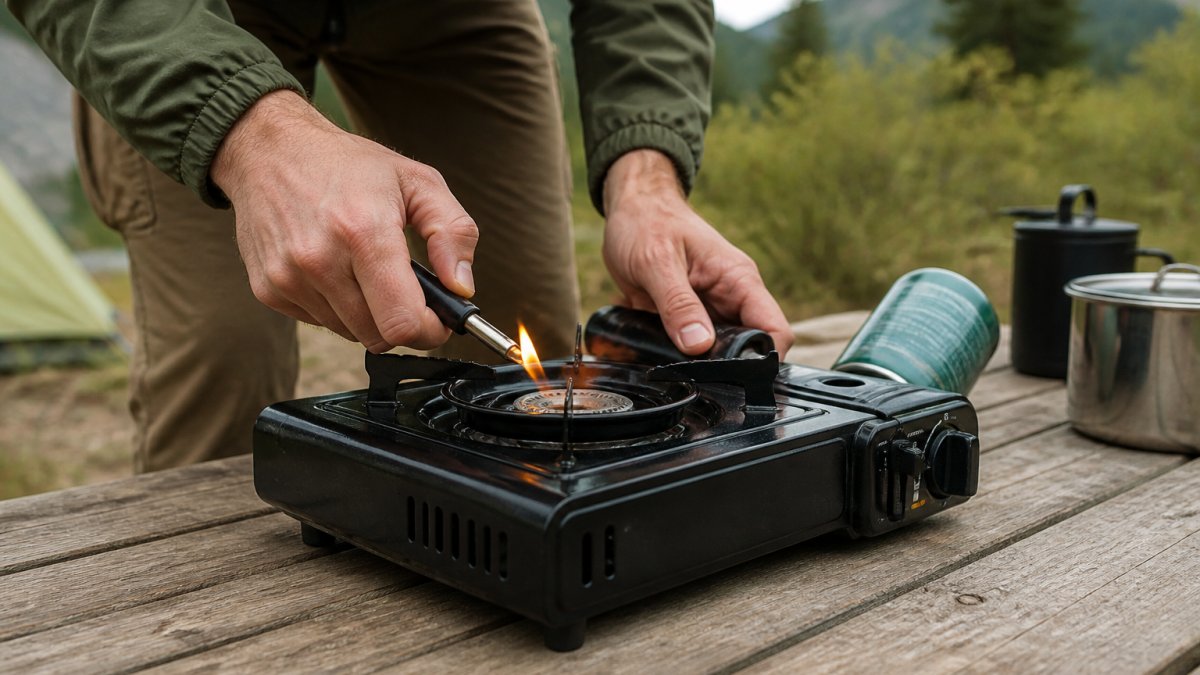
Setup:
- Place the stove on a flat surface and ensure all burners sit flush against the cooking platform
- Insert the fuel canister and lock it securely, you'll hear or feel a click
- Test for leaks by applying soapy water to the connection point; bubbles indicate a leak (tighten or reconnect)
- Position your cookware on the burner before igniting
Lighting: Press the ignition button until it clicks and sparks the burner.
Once lit, adjust the heat dial slowly. Start high to boil water, then reduce to simmer for cooking.
Shutdown: Turn the heat dial fully counterclockwise until it clicks.
Never leave a lit stove unattended. Even brief trips to grab water or check on gear create fire hazards.
Alpine Cuisine Lightweight Portable Gas Stove for Outdoor and Indoor →
Camping Stove Safety Tips Every Beginner Must Know
Keep a fire extinguisher or large water container within arm's reach at all times; sand works too.
Never refuel a hot stove. Wait at least 15 minutes after shutdown before disconnecting the fuel canister.
Keep the stove away from sleeping areas.
Inspect your fuel canister for dents or damage before each trip.
Teach everyone in your group where the stove is, how hot it gets, and the no-touch rule for non-cooks.
What Makes a Camping Stove Beginner-Friendly
The best camping stoves for beginners aren't the most feature-packed or the lightest, they're the ones that remove friction from your first trips. Here are the features that matter and a decision path for choosing between them.
The four features that actually reduce beginner friction
Automatic ignition. Push-button ignition eliminates matches and lighters, which are easy to forget and awkward in wind or rain. The Alpine Cuisine's iron ignition system is designed to fire consistently.
Simple fuel connection. Bayonet-style cartridges (used by both stoves here) snap in with a click and require no threading or tools. Practice the connection at home before your trip.
Stable burner design. A wide base and low center of gravity matter more than most beginners expect, a full pot of boiling water on a wobbly stove is a burn risk.
Reliable simmer control. You need to do more than boil water violently, pasta, rice, sauces, and eggs all need lower, steadier heat. According to CleverHiker's 2026 review after cooking 800 meals, adjustable flame output is what separates stoves beginners can live with from stoves they fight.
A beginner decision tree: match the stove to your trip
Rather than shopping by feature list, answer these questions in order.
- Will you carry the stove on your back, or does it live in the car? Backpacking points toward a single-burner stove under about 3 pounds; car camping opens up two-burner options.
- How many people are you feeding? Solo or a partner: one burner is usually enough. Four to six people, or multiple dishes at once: the Leafy Twin Burner's 15,000 BTU total output (7,500 per burner) lets you boil and simmer simultaneously.
- What temperatures will you camp in? Warm-weather trips are fine on butane; shoulder-season or cold trips push you toward propane or a dual-fuel stove.
- What's your realistic total budget? The Alpine Cuisine at $143.99 plus the camping cookware set, aluminum at $38.99 puts a complete single-burner system under $185 before fuel. The Leafy Twin Burner at $139.99 is cheaper up front but uses more fuel per meal.
- How often will you go? A few trips a year favors a simple, forgiving stove; frequent campers can justify spending more on ignition reliability and simmer precision.
What to skip on your first stove
Ultra-compact ultralight stoves are harder to use, more prone to tipping, and offer minimal simmer control, a poor first stove. Start with a forgiving design, master lighting, heat control, and shutdown, then specialize later. Skip complicated fuel couplings or proprietary canisters unless you've confirmed the fuel is easy to buy where you camp.
Total cost of ownership for a beginner
The sticker price is the least useful number for a first-time buyer. A realistic first-season budget includes:
- Stove: $140-$145 for either option here.
- Fuel: several canisters per season; butane runs roughly $3-5 each, and a weekend trip can use one to two.
- Cookware: around $39 for the aluminum set linked here.
That lands in the low-to-mid $200s, and fuel and cookware carry over if you upgrade the stove later.
Practice before you go
Whatever you choose, light the stove at home, boil water, simmer something, and practice shutdown before your first trip. A stove you've already used is one you can trust when the light fades and dinner is late.
Getting Started: Choosing Your First Camping Stove
Car camping with a group? The Leafy Twin Burner handles multiple dishes and feeds 4-6 people, with 15,000 BTU for faster boiling and reliable simmering at $139.99.
Budget-conscious beginner? Both options cost under $150. Cheaper stoves often lack reliable ignition or stable burners, false economy when safety matters.
Pair your stove with the camping cookware set, aluminum ($38.99), which includes pots and pans sized for portable cooking.
Frequently Asked Questions
What should a beginner look for in a camping stove?
Beginners should prioritize ease of use, portability, and fuel availability. Look for stoves with automatic or matchless ignition to eliminate the need for matches. Compact design and light weight matter for transport, while simmer control lets you adjust heat for different meals. The Alpine Cuisine model at $143.99 offers automatic ignition and compact design, making it ideal for first-timers. Check that fuel canisters are easy to find in your area before committing to a fuel type.
How do you use a camping stove safely?
Always set up your camping stove on level, stable ground away from tents and vegetation. Test for gas leaks before lighting by applying soapy water to connections and listening for hissing sounds. Secure the fuel canister firmly in place, then ignite using the automatic lighter or matches. Never leave a lit stove unattended, and always turn the control knob fully closed when finished. Allow the stove to cool before moving it or refueling. Keep a fire extinguisher or sand nearby as a precaution.
What fuel do beginner camping stoves use?
Most beginner camping stoves run on butane or propane, sold in convenient canisters. Butane works well in moderate temperatures but loses power in cold weather. Propane performs better in cold conditions and is widely available. Some stoves accept dual fuel, offering flexibility. The Leafy Twin Burner at $139.99 uses butane cartridges with 15,000 BTU output, suitable for most weekend trips. Check local availability before your trip to ensure you can find replacement canisters.
Is a two-burner camping stove better for beginners?
Two-burner stoves offer more cooking flexibility, letting you simmer one dish while boiling water on another. They're ideal for groups or family camping. However, they're heavier and less portable than single-burner options. Beginners camping alone or with one other person often find single-burner stoves sufficient and easier to manage. The Leafy Twin Burner ($139.99) suits family trips, while the Alpine Cuisine ($143.99) works for smaller groups or solo trips. Your choice depends on group size and cooking ambitions.
Can you use a camping stove inside a tent?
Never use a camping stove inside a tent or enclosed space. Gas stoves produce carbon monoxide, which is odorless and deadly in confined areas. Always cook outside in open air with good ventilation. Set up your stove at least 15 feet from your tent, preferably downwind. This protects you from fumes and reduces fire risk. Even in poor weather, use a windscreen or portable shelter designed for outdoor cooking rather than bringing the stove indoors.
Starting your camping journey with reliable gear sets you up for success. The Alpine Cuisine and Leafy Twin Burner from Fitness Pro Living deliver the automatic ignition, stable design, and fuel efficiency beginners need. Both stoves perform consistently across seasons and handle real cooking tasks without frustration. Get started with quality equipment you can trust, and you'll camp confidently for years to come.
